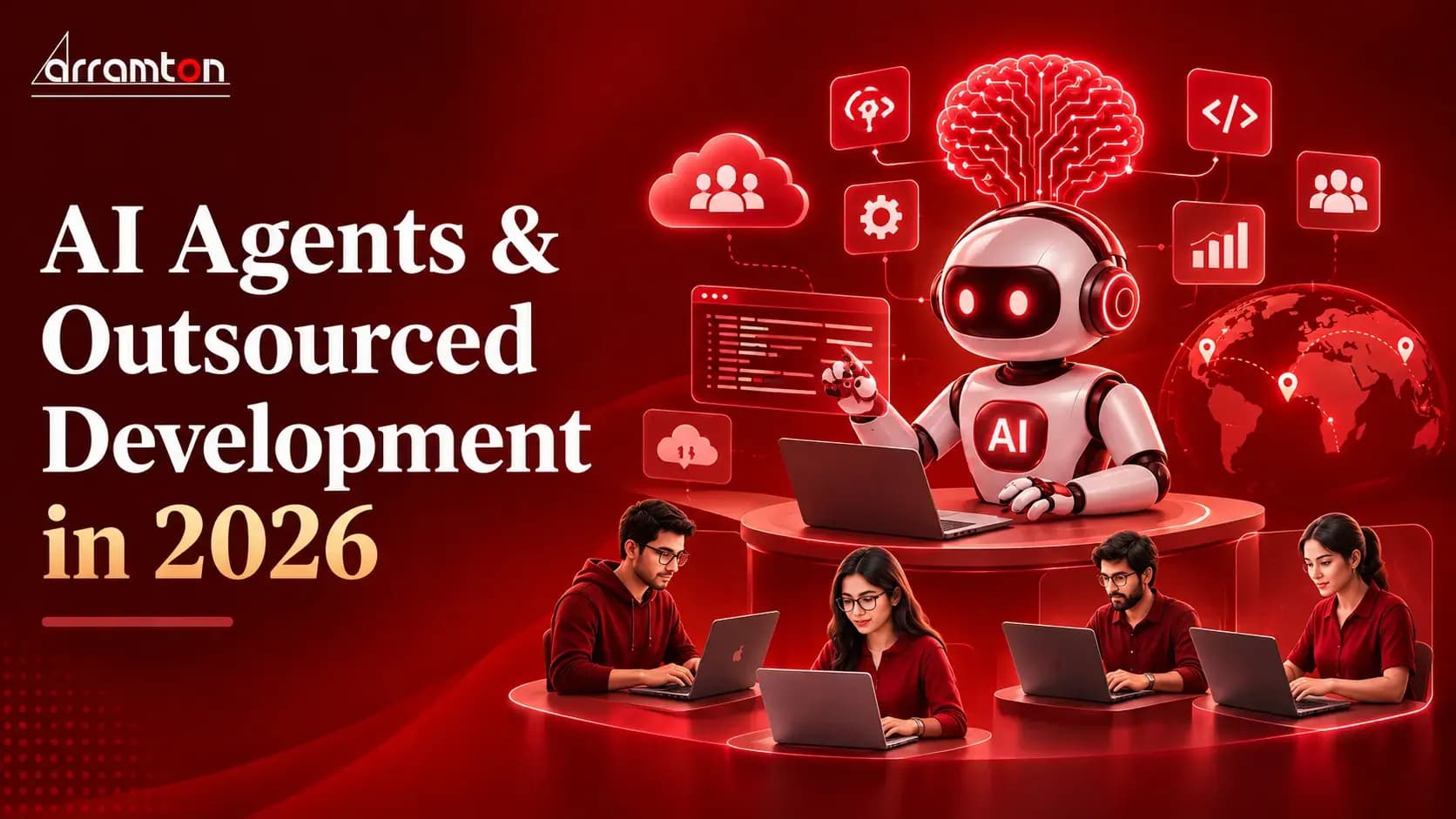
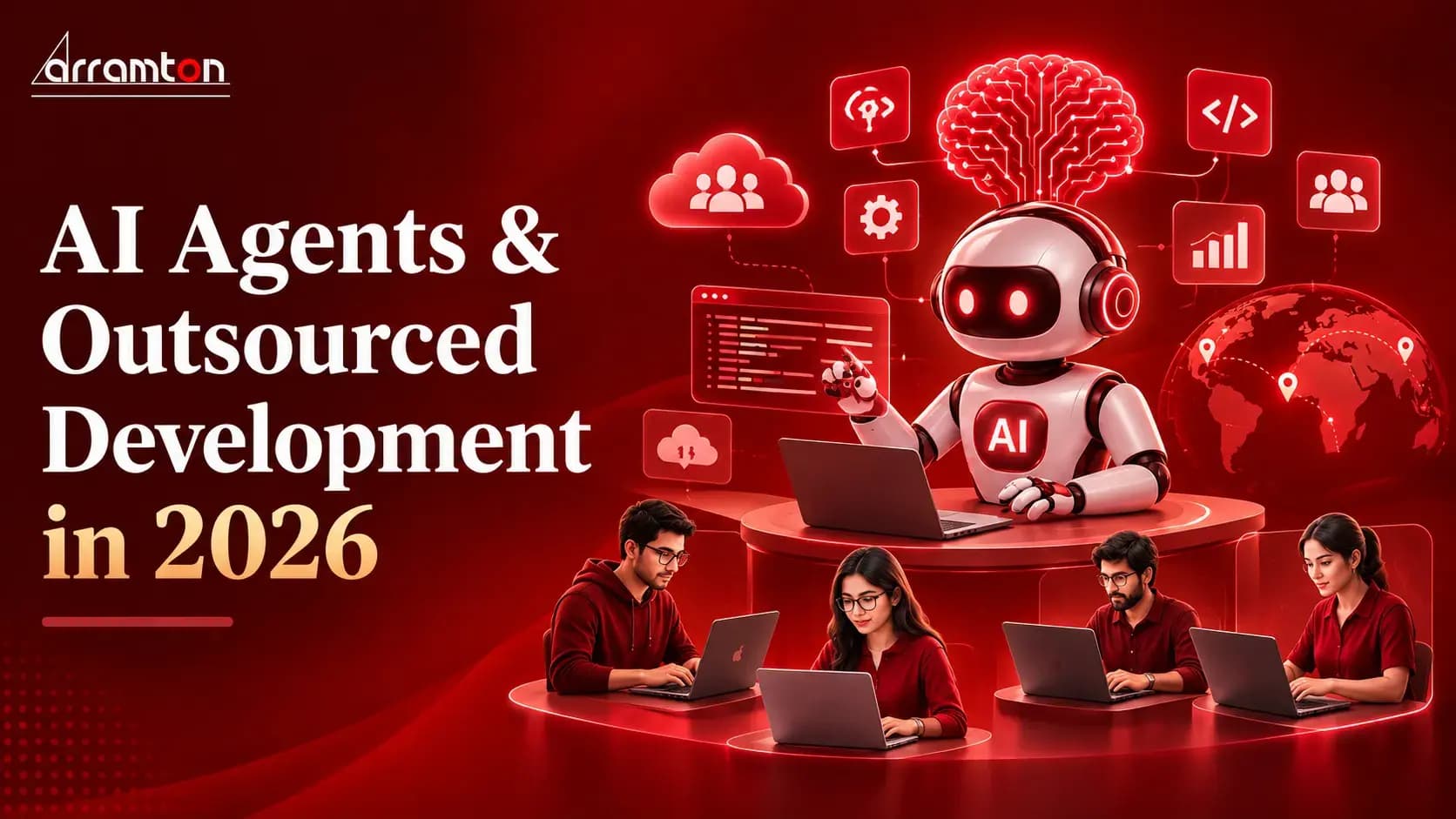
Most UK businesses looking to scale their development teams are still operating under a 2020s mindset, unaware that AI agents are not just automating tasks, but fundamentally reshaping how we source and manage talent in 2026. The promise of faster delivery and reduced costs is real, but the pitfalls are often glossed over by those selling AI-driven solutions. The truth is, AI agents are changing outsourced development, but not in the ways you might expect, and certainly not without a learning curve for both clients and providers. Companies that fail to grasp this shift risk falling behind in a rapidly evolving tech landscape.
The Promise vs. The Practical: What AI Agents Actually Do
AI agents, in the context of outsourced development, aren't sentient robots coding your next app. They are sophisticated algorithms and software systems designed to automate repetitive, time-consuming tasks within the software development lifecycle. Think of them as highly specialised assistants, capable of learning and adapting. Their primary role is augmenting human developers, not replacing them outright. This means handling tasks like code review, bug detection, automated testing script generation, and even initial project scoping based on predefined parameters.
The real change isn't AI writing entire applications from scratch — it's about AI optimising the processes around human-led development. For a UK startup founder, this translates to potentially quicker turnaround times on routine fixes and more efficient QA cycles, freeing up your human team for complex problem-solving and innovative feature development.
Automating the Mundane: Code Generation & Testing
One of the most visible impacts of AI agents is in code generation and testing. Tools like GitHub Copilot and Amazon CodeWhisperer can suggest lines or entire functions of code based on context, significantly speeding up the coding process for common patterns. For developers building in Python or JavaScript, these tools have already become indispensable for reducing boilerplate code.
Beyond generation, AI is revolutionising testing. Instead of manually writing thousands of test cases, AI agents can analyse code and automatically generate comprehensive test suites. This dramatically cuts down the time and resources spent on QA, a critical factor for companies focused on rapid iteration. For example, a fintech firm in London might reduce their regression testing window from three days to just one, enabling more frequent releases of new features and security patches.
The New Landscape of Outsourcing: Beyond the Hype
The narrative around AI agents often focuses on efficiency gains, but the true impact on outsourced development is more nuanced. It’s not just about cheaper labour; it’s about a shift in the skills required from both offshore development partners and the in-house teams managing them. The focus moves from task execution to strategic oversight and AI integration.
This means that an outsourced team's value proposition in 2026 isn't just their ability to code, but their proficiency in leveraging AI tools to enhance their services. A team that can expertly manage AI-assisted development workflows will inherently be more valuable than one that resists or struggles to adopt these technologies.
The common mistake businesses make is assuming AI agents will magically solve all their outsourcing challenges. It's not a plug-and-play solution. Integrating AI effectively requires a deep understanding of your development processes and a commitment to retraining teams. Have you considered the technical expertise required to effectively manage and tune these AI tools within your development pipeline?
Evolving Roles: From Coder to AI Orchestrator
As AI agents take over more routine coding and testing tasks, the role of the human developer evolves. Instead of spending hours debugging common errors, developers will increasingly act as 'AI orchestrators'. This involves guiding the AI, validating its output, integrating AI-generated components, and focusing on the higher-level architecture and problem-solving that still requires human ingenuity.
For outsourced teams, this means a demand for developers who are not only skilled coders but also adept at prompt engineering, understanding AI outputs, and integrating them seamlessly into existing projects. An outsourced team in Delhi, for instance, might be tasked with fine-tuning AI models for a UK client's specific domain, a task far removed from traditional offshore development.
Navigating the AI-Augmented Outsourcing Partner Search
When evaluating potential outsourced development partners in 2026, your criteria need to evolve. It's no longer sufficient to look solely at a company's portfolio or hourly rates. You must assess their adoption and mastery of AI-driven development practices.
Look for partners who can articulate their AI strategy. Do they use AI for code suggestions? How do they leverage AI in their testing and QA processes? Are their developers trained in using AI tools effectively? At Arramton, we've seen this pattern across over 40 projects — teams that proactively integrate AI into their workflows see an average of 20% faster delivery times on feature iterations, provided their human oversight is robust.
Don't just take their word for it. Ask for case studies or examples of how AI has specifically improved project outcomes for their clients. A truly advanced partner will have data points and demonstrable results. A genuine competitive advantage comes from a team that has already navigated the learning curve and is ready to deploy AI for your benefit.

Key Questions to Ask Potential Partners
- What AI tools do you currently use in your development process?
- How do these tools improve code quality, testing efficiency, and delivery speed?
- What training and support do you provide your developers to effectively use AI agents?
- Can you share specific examples of projects where AI integration led to tangible client benefits?
These questions help cut through the noise and identify partners who are genuinely leveraging AI to deliver superior results, not just talking about it.
The Cost Equation: AI Agents and Your Development Budget
The financial implications of AI agents on outsourced development are complex. On one hand, the automation of tasks *should* lead to cost savings. Faster development cycles and more efficient QA mean less billable hours for certain activities.
However, the initial investment in AI tools, training, and specialised talent can offset some of these savings. Furthermore, the value of human developers shifts. While some tasks become cheaper, the demand for high-level strategic thinking and AI oversight increases, potentially driving up rates for experienced personnel who can effectively manage these new workflows.
The most significant financial risk for businesses in 2026 isn't the cost of AI, but the cost of *not* adopting it, leading to slower delivery and higher operational inefficiencies compared to competitors. A Series A founder in San Francisco might find their AI-augmented competitors are iterating twice as fast, capturing market share simply because their development pipeline is more efficient.
Understanding the ROI Beyond Hourly Rates
When you consider the ROI of AI-augmented outsourcing, look beyond mere hourly rates. Factor in reduced time-to-market, improved software quality due to fewer bugs, and the increased capacity of your team to focus on innovation. The real value lies in faster business growth enabled by more efficient technology development.
This means that an outsourced team that masters AI might command a higher hourly rate, but their overall project cost and value proposition could still be significantly better than a cheaper, less AI-savvy competitor. It's a shift from buying hours to buying outcomes, powered by intelligent automation.
The Future of Outsourcing: A Human-AI Partnership
The future of outsourced development is not one of AI replacing humans, but of humans and AI working in synergy. AI agents will handle the repetitive, data-intensive tasks, allowing human developers to focus on creativity, complex problem-solving, and client collaboration. This partnership offers the potential for unprecedented efficiency and innovation.
For businesses, this means choosing partners who understand and embrace this symbiotic relationship. They should have a clear strategy for integrating AI into their development processes while ensuring their human talent remains at the forefront of design, architecture, and strategic decision-making. The ability to manage this human-AI collaboration is becoming the defining characteristic of leading outsourced development firms.

Preparing Your Business for AI-Driven Outsourcing
To thrive in this new era, businesses must proactively prepare. This involves:
- Educating your internal teams on the capabilities and limitations of AI in development.
- Updating your vendor selection criteria to include AI proficiency.
- Fostering a culture that embraces AI as a tool for augmentation, not a threat.
- Collaborating closely with your chosen partners to define how AI will be integrated into your specific projects.
By taking these steps, you can ensure your outsourced development efforts remain competitive and effective in the age of AI.
Frequently Asked Questions
What exactly are AI agents in software development?
AI agents are sophisticated software systems designed to automate specific tasks in the development lifecycle. They handle functions like code suggestions, bug detection, automated testing, and data analysis, augmenting human developers rather than replacing them entirely. Their goal is to increase efficiency and speed.
How do AI agents change the cost of outsourced development?
While AI can automate tasks, reducing billable hours for some activities, it also introduces costs for tools, training, and specialised talent. The overall ROI depends on effective integration and the improved speed and quality of development, which can outweigh initial investments.
Should I worry about my outsourced team being replaced by AI?
It's unlikely that AI agents will completely replace human developers soon. Instead, their roles will evolve. Developers who can effectively use AI tools, focus on complex problem-solving, and manage AI-human collaboration will be in high demand, making them more valuable.
What's the biggest mistake UK companies make with AI in outsourcing?
The most common error is treating AI as a plug-and-play solution. Businesses often underestimate the need for skilled oversight, training, and process adaptation. Simply adopting AI tools without a clear strategy and skilled personnel leads to inefficiencies and missed opportunities.
Conclusion
The initial promise of AI agents transforming outsourced development might have conjured images of fully automated coding factories. Yet, the reality for UK and US businesses in 2026 is a more subtle, yet profound, shift towards a human-AI partnership. The challenge isn't about fearing AI's capabilities, but understanding how to harness them effectively. The single most important takeaway is that successful outsourcing in this new era hinges on selecting partners who view AI as an augmentation tool, not a replacement for skilled human expertise.
If you're evaluating partners for AI-augmented development and need a team that balances cutting-edge tech integration with proven development excellence, Arramton builds custom solutions for UK and US companies.