Why AI-Native Development Costs Less Than You Think
The perception that AI-native app development is a significant financial leap is a misconception. In reality, leveraging AI tools and methodologies often streamlines the development process, leading to a more efficient and, surprisingly, less costly outcome. This isn't about cutting corners; it's about smarter, faster development.
Traditional development relies heavily on manual coding for every function and feature. AI-native approaches, however, introduce automation and intelligent assistance at various stages. Think of AI code generators, intelligent debugging tools, and automated testing suites. These augment developer capabilities, allowing them to focus on complex problem-solving rather than repetitive tasks.
For a UK startup founder, this translates into faster time-to-market and a more predictable budget. The upfront investment in AI-enhanced processes often yields substantial savings down the line, making sophisticated app development accessible even for leaner businesses. For instance, a London-based e-commerce startup recently found that using AI-assisted code generation reduced their MVP build time by nearly 25%.
So, what does this actually mean if you're building in Q3? It means looking beyond raw developer hours and considering the total project efficiency. AI isn't just a buzzword; it's a tangible driver of cost-effectiveness in app creation.
App Development Cost UK: The Honest Numbers (2026)
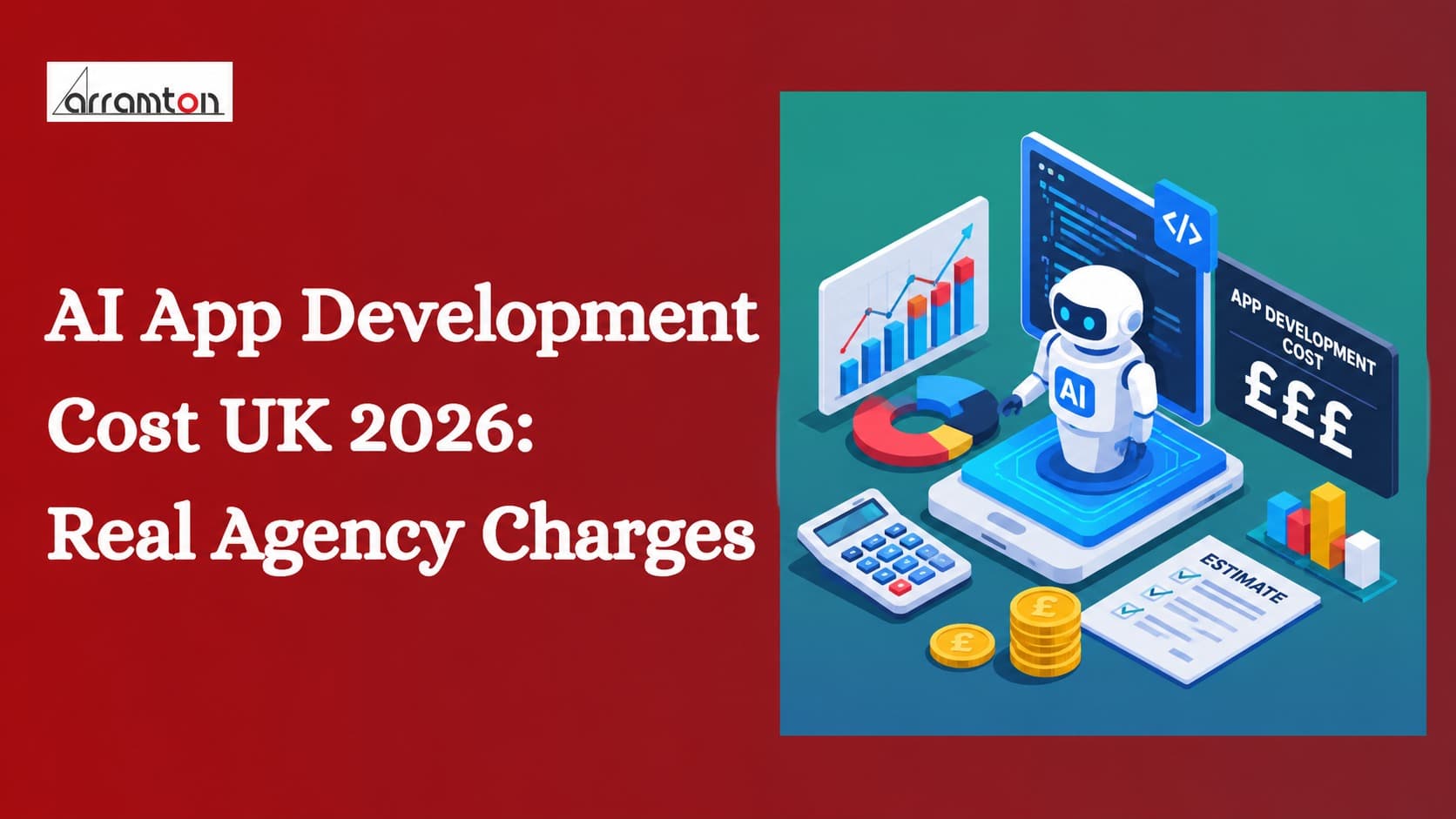
Let's cut through the agency jargon. For 2026, a well-scoped Minimum Viable Product (MVP) for a cross-platform mobile app, built by an AI-native agency in the UK, typically falls within the £25,000 to £60,000 range. This scope usually includes 3-5 core user flows, a robust backend API, and the necessary preparations for App Store and Google Play submission.
Compare this to a traditional UK agency delivering the same scope. You're likely looking at a quote between £45,000 and £90,000. The significant difference isn't magic; it's the impact of AI-augmented productivity. Fewer developer hours are needed to achieve equivalent output, directly reducing the overall bill.
For more complex enterprise-grade applications, which involve intricate integrations, strict compliance requirements (like GDPR or HIPAA), or multiple distinct user roles, the investment naturally climbs. These projects, whether AI-native or traditional, generally range from £80,000 to £250,000 and beyond. The complexity dictates the cost, not just the methodology.
This gives a clearer financial picture for UK businesses evaluating their options. Understanding these benchmarks is crucial before engaging with any development partner. What's your budget for an MVP in the current market?

How AI Reduces Developer Hours (And Your Bill)
AI's role in reducing developer hours is multifaceted, directly impacting your final bill. Intelligent code completion tools, like GitHub Copilot or Tabnine, can suggest entire lines or blocks of code, significantly speeding up the coding process. A developer might spend 2 hours writing routine code that an AI can generate in 15 minutes.
Automated testing is another major contributor. AI-powered platforms can generate test cases, execute them, and identify bugs with a speed and thoroughness that manual QA struggles to match. This reduces the time spent on debugging and re-testing cycles. For a UK-based fintech, optimising their testing pipeline with AI slashed bug-fixing time by 40%.
Furthermore, AI can assist in project management by predicting potential bottlenecks, optimising task allocation, and even generating project documentation. This increased efficiency across the board means fewer billable hours for the same functional outcome. It’s not about replacing developers, but empowering them with intelligent tools.
The implication for businesses is clear: by choosing an AI-native approach, you're opting for a development process that's inherently more efficient. This efficiency is then reflected in the cost, making advanced app solutions more attainable.
AI-Native Agency vs Traditional Agency: Cost Comparison Table
The distinction between AI-native and traditional development agencies is becoming increasingly important for budget-conscious businesses in the UK. While both aim to deliver high-quality software, their operational efficiencies and, consequently, their pricing structures differ significantly.
| Feature |
AI-Native Agency (UK-based) |
Traditional Agency (UK-based) |
| MVP Scope (3-5 Flows, API, Submission) |
£25,000 – £60,000 |
£45,000 – £90,000 |
| Developer Hour Efficiency |
AI-augmented tools reduce hours by 20-40% |
Standard manual coding |
| Testing & Debugging Time |
Reduced by 30-50% via AI automation |
Manual, time-intensive |
| Project Management Efficiency |
AI-assisted optimisation |
Standard project management |
| Technology Stack Focus |
Leverages AI integration (e.g., for backend logic, chatbots) |
Standard, often legacy-oriented |
| Cost Driver |
Efficiency gains from AI tools |
Linear developer hours, overhead |
This table illustrates a tangible cost difference. Choosing an AI-native agency isn't just about adopting new technology; it's a strategic decision to optimise the development lifecycle for better value. Have you considered the impact of AI on your project's overall cost structure?
For a UK startup founder, this comparison highlights where significant savings can be realised without compromising on quality. It’s about working smarter, not just harder.
What Affects App Development Cost in the UK
Beyond the core development methodology, several critical factors influence the final cost of app development in the UK. The complexity of features is paramount; advanced AI integrations, real-time data processing, or sophisticated animations will naturally demand more resources and time.
The platform choice also plays a role. While cross-platform development (using frameworks like React Native or Flutter) is often more economical than building native iOS and Android apps separately, native development might be chosen for highly platform-specific features or performance requirements. For an MVP, cross-platform is usually the economically sound choice.
User interface (UI) and user experience (UX) design are crucial. A highly polished, custom, and intuitive design requires more design hours than a template-based approach. Agencies invest significantly in UX research to ensure your app resonates with its target audience, and this expertise is factored into the cost.
Furthermore, the specific technologies and third-party integrations needed will impact pricing. Integrating with existing enterprise systems, using specialised APIs, or incorporating hardware features (like IoT devices) can add substantial complexity and cost. At Arramton, we've seen this pattern across over 30 projects — the need for seamless integration with legacy systems often adds significant unforeseen effort if not scoped meticulously from the start.
Understanding these variables empowers you to have a more informed discussion with potential development partners and to budget more accurately for your project in the UK market.
Hidden Costs Traditional Agencies Don't Tell You About
Traditional development agencies, keen to win contracts, often present a seemingly straightforward quote that omits critical ongoing or latent expenses. One common hidden cost is the 'agency margin' added to every phase, which can inflate the total project cost by 40-80% over raw developer salaries.
Scope creep, the insidious expansion of project requirements beyond the initial agreement, is another frequent pitfall. Without strict change management and clear communication, what starts as a small tweak can balloon into significant extra work, leading to unexpected invoices. Many traditional agencies don't adequately buffer for this in their initial quotes.
Furthermore, poorly defined project management or communication overheads can add to the billable hours without delivering tangible development progress. The cost of frequent, unproductive meetings or unclear task delegation can be substantial. We've seen projects where project management consumed 30% of the budget without clear strategic direction.
Post-launch maintenance and support are often undersold. Agencies might offer basic support packages that don't cover critical updates, security patches, or minor feature enhancements, leaving you with a live app that quickly becomes outdated or vulnerable. So, is cheap app development in the UK a red flag? Yes — below £15,000 for a functioning multi-screen app should raise questions, often signalling these hidden costs or compromises.
Being aware of these potential hidden costs allows you to ask more probing questions during the quoting process and ensure your budget remains realistic and transparent.

Staff Augmentation vs Fixed-Price Project: Which Costs Less?
The question of whether staff augmentation or a fixed-price project is more cost-effective depends entirely on your internal capacity and project structure. Staff augmentation involves hiring dedicated developers who integrate into your existing team, typically costing £2,800 to £6,500 per developer per month, depending on seniority and location.
For a project requiring, say, two developers for 12 weeks, staff augmentation would likely incur raw developer costs of approximately £16,800 to £39,000. This model makes economic sense when you have a clear vision, internal project management, and the ability to direct the development effort efficiently.
A fixed-price agency engagement for the same project might be quoted between £35,000 and £60,000. This price includes the agency's margin, comprehensive project management, buffer for unforeseen issues, and full responsibility for delivery. The agency margin and overhead can add 40-80% to the raw developer cost you'd see in staff augmentation.
Fixed-price projects are ideal when you need a complete end-to-end solution, including strategy, design, development, and project management, and your internal team lacks the bandwidth or expertise. The choice hinges on whether you need a team to execute a plan you provide, or a partner to manage the entire build.
For UK startups with limited internal technical leadership, a fixed-price engagement might offer more predictability, even at a higher headline cost. However, for established teams ready to scale, staff augmentation offers a more direct path to cost control.
How to Get an Accurate Quote for Your App
Obtaining an accurate quote for your app development project in the UK requires thorough preparation and clear communication. Start by defining your project scope precisely. Document your core features, target audience, desired platforms (iOS, Android, cross-platform), and any specific technical requirements or integrations.
Create user stories or detailed functional specifications. Instead of saying 'user registration', specify 'users can register via email and password, or Google/Apple OAuth, with password reset functionality'. The more detail you provide, the less room there is for assumption on the agency's part. A well-scoped mobile app MVP from an AI-native agency in the UK typically costs £25,000-£60,000 for a cross-platform app with 3-5 core user flows, a backend API, and App Store submission.
Be transparent about your budget and timeline expectations. This helps agencies tailor their proposals to your constraints. Ask potential partners about their development process, particularly their approach to AI integration and how it impacts efficiency and cost. Have you looked at what your team spends on tasks that could be automated?
Request detailed proposals that break down costs by phase or feature set, rather than a single lump sum. This allows for better comparison and understanding. If you're considering staff augmentation, clearly define the roles and seniority you require. For founders evaluating outsourcing their tech, this diligence is essential for securing a reliable partner.
FAQs
Q1: How much does AI-native app development cost in the UK in 2026?
A well-scoped mobile app MVP from an AI-native agency in the UK typically costs £25,000-£60,000 for a cross-platform (React Native or Flutter) app with 3-5 core user flows, a backend API, and App Store submission. A traditional UK agency quoting the same scope typically prices £45,000-£90,000 for equivalent output. The cost difference comes from AI-augmented productivity — fewer developer hours needed for the same deliverable. Enterprise apps with complex integrations, compliance requirements, or multiple user types range from £80,000-£250,000 regardless of whether development is AI-native.
Q2: Is cheap app development in the UK a red flag?
Yes — below £15,000 for a functioning multi-screen app should raise questions. At that price point, you're typically getting: offshore developers with no UK accountability, template-based development with your branding dropped onto a generic codebase, or an incomplete product that requires significant additional investment to function properly. The lowest reliable price for a genuinely custom app with meaningful functionality is around £20,000-£25,000 from a UK-registered agency using AI-augmented development. Below that, get references from recent clients and ask to see the actual code structure before signing.
Q3: What's the difference in cost between iOS-only, Android-only, and cross-platform?
iOS-only (Swift/SwiftUI): £25,000-£55,000 for MVP. Android-only (Kotlin): £22,000-£50,000. Cross-platform React Native or Flutter: £28,000-£65,000 for both platforms simultaneously. Cross-platform is more expensive than a single native platform because it requires more architecture planning upfront, but significantly cheaper than building iOS and Android natively and separately (which would cost £45,000-£100,000+ for the same scope). For most UK startups, cross-platform is the economically rational choice unless deep platform-specific functionality is required.
Q4: How does staff augmentation compare cost-wise to hiring a development agency?
Staff augmentation (dedicated developers working within your team) typically costs £2,800-£6,500/month per developer depending on seniority. A project that takes a team of 2 developers 12 weeks via staff augmentation = approximately £16,800-£39,000 in developer costs. The same project quoted as a fixed-price agency engagement might be £35,000-£60,000 — the agency margin, project management overhead, and buffer pricing adds 40-80% to the raw developer cost. Staff augmentation makes economic sense when you have the internal capacity to direct a development team. Fixed-price agency engagement makes sense when you need full project management included.
Q5: Are there any ongoing costs I should budget for after app launch?
Yes — plan for these: App Store fees (Apple Developer Program £79/year, Google Play one-time £20), hosting and infrastructure (£200-£800/month depending on scale and cloud provider), ongoing development for updates and new features (40-80 hours/month typically, £3,000-£8,000/month), App Store compliance updates when Apple or Google release new OS versions (2-4 times/year, typically 8-20 hours per update), and security patches. A realistic ongoing budget for a live consumer app with active users is £3,500-£6,000/month for infrastructure, maintenance, and minor improvements.
Conclusion
AI-native development has fundamentally changed the economics of building modern applications. By combining experienced developers with AI-powered coding, testing, and project management tools, businesses can reduce development time, accelerate product launches, and achieve significant cost savings without compromising quality. Whether you're planning an MVP or a large-scale enterprise platform, understanding the real cost drivers—from project scope and technology stack to agency model and ongoing maintenance—helps you make informed investment decisions.
Rather than choosing the lowest quote, focus on finding a technology partner that offers transparent pricing, a clearly defined scope, and proven expertise in delivering AI-powered solutions. If you're looking to build scalable, cost-effective applications with an AI-first approach, explore Arramton's AI Development Services to learn how AI-native development can help you launch faster while maximizing your technology investment.