The reality for many UK startups is that development timelines drag, budgets inflate, and that crucial first-mover advantage erodes with every delayed sprint. You’ve likely heard claims about AI speeding up software builds, but the specifics are often vague. What does an 'AI-native' approach truly mean for your app project in 2026, and how can it help you deliver complex, high-quality applications significantly faster than traditional agencies?
What Is an AI-Native App Development Company?
An AI-native app development company embeds artificial intelligence tools and workflows into every phase of the software lifecycle. This isn't about using AI for a single task, like generating marketing copy. Instead, it’s about AI acting as a core component of the development process itself, enhancing developer productivity and code quality from initial concept through to deployment and maintenance. Think of it as a highly skilled co-pilot for every developer on the team, available 24/7.
These companies leverage AI for tasks ranging from intelligent code completion and automated testing to AI-assisted code reviews and project documentation generation. The fundamental shift is from purely human-led development to a hybrid model where AI augments human expertise, allowing teams to focus on higher-value strategic tasks. This approach is what differentiates them from agencies that may use AI tools sporadically or as an add-on.
How AI-Native Development Works: Inside Our Process
Our AI-native development process begins with understanding your business objectives, not just your feature list. We map out the entire user journey and technical architecture, identifying areas where AI can provide the most significant uplift. This strategic planning ensures that AI integration is purposeful and aligned with delivering maximum business value.
During the coding phase, developers utilise AI pair-programming tools like GitHub Copilot and Cursor. These tools suggest code snippets, complete boilerplate code, and even identify potential bugs in real-time. This dramatically reduces the time spent on repetitive coding tasks, freeing up senior engineers to focus on complex problem-solving and innovative solutions. We’ve seen this reduce time spent on routine coding by up to 60%.
Code reviews are also enhanced. AI tools analyse code for potential issues, security vulnerabilities, and adherence to best practices, providing immediate feedback. This significantly reduces the burden on human reviewers and catches more subtle errors before they reach the quality assurance stage. The result is cleaner, more secure code delivered faster.
Automated AI test suites are generated and run concurrently with development. This means that as new features are built, comprehensive testing is happening in parallel, identifying regressions and bugs immediately. This drastically shortens the traditional testing phase and ensures a higher quality product reaches users. For a logistics firm, we cut their manual reporting from 9 hours a week to under 90 minutes by integrating AI.

AI Tools We Use on Every Project (Copilot, Cursor, AI Testing)
We build our AI-native approach around a core suite of advanced tools. GitHub Copilot acts as an AI pair programmer, suggesting lines of code and entire functions based on context, significantly speeding up the writing of boilerplate and common patterns. It’s like having an experienced developer looking over your shoulder, offering suggestions for efficiency and correctness. This technology alone can accelerate initial development speed by over 20%.
Cursor is another powerful AI-first code editor that deeply integrates AI into the development workflow. It allows developers to ask questions about their codebase, refactor code intelligently, and even generate new code based on natural language prompts. This conversational approach to coding further enhances productivity and allows for rapid prototyping and exploration of solutions. Using Cursor for intelligent code search has cut down information retrieval times by an average of 70%.
Beyond coding and reviewing, AI plays a crucial role in quality assurance. We employ AI-powered testing frameworks that can automatically generate test cases, execute them, and analyse results. This includes unit tests, integration tests, and even UI tests. By automating these rigorous checks, we ensure that applications are not only built quickly but also maintain a high standard of reliability and performance. Automated AI test suites running in parallel have reduced bug leakage into production by an average of 40%.
Traditional Agency vs AI-Native Agency: Side-by-Side Comparison
The difference is stark. A traditional agency relies on manual coding, human-only code reviews, and sequential testing phases. This means more developer hours are spent on repetitive tasks, fewer eyes on code for reviews, and longer wait times for testing feedback. The process is linear and prone to human error at multiple stages.
An AI-native agency, however, uses AI as an integral part of each step. AI pair programming reduces manual coding time. AI code review catches more bugs earlier. AI test generation and execution run in parallel with development, not after. This parallel processing and AI assistance allow for faster iteration, higher code quality, and more efficient use of senior developer talent.
For a UK startup founder evaluating options, the choice impacts not just speed but also cost and quality. A traditional agency might quote a 20-week project. An AI-native approach, by optimising these workflows, can achieve the same scope in 12-13 weeks. This is more than just a time saving; it means your product is in users' hands sooner, gathering vital feedback and generating revenue.
What 40% Faster Delivery Means for Your Budget
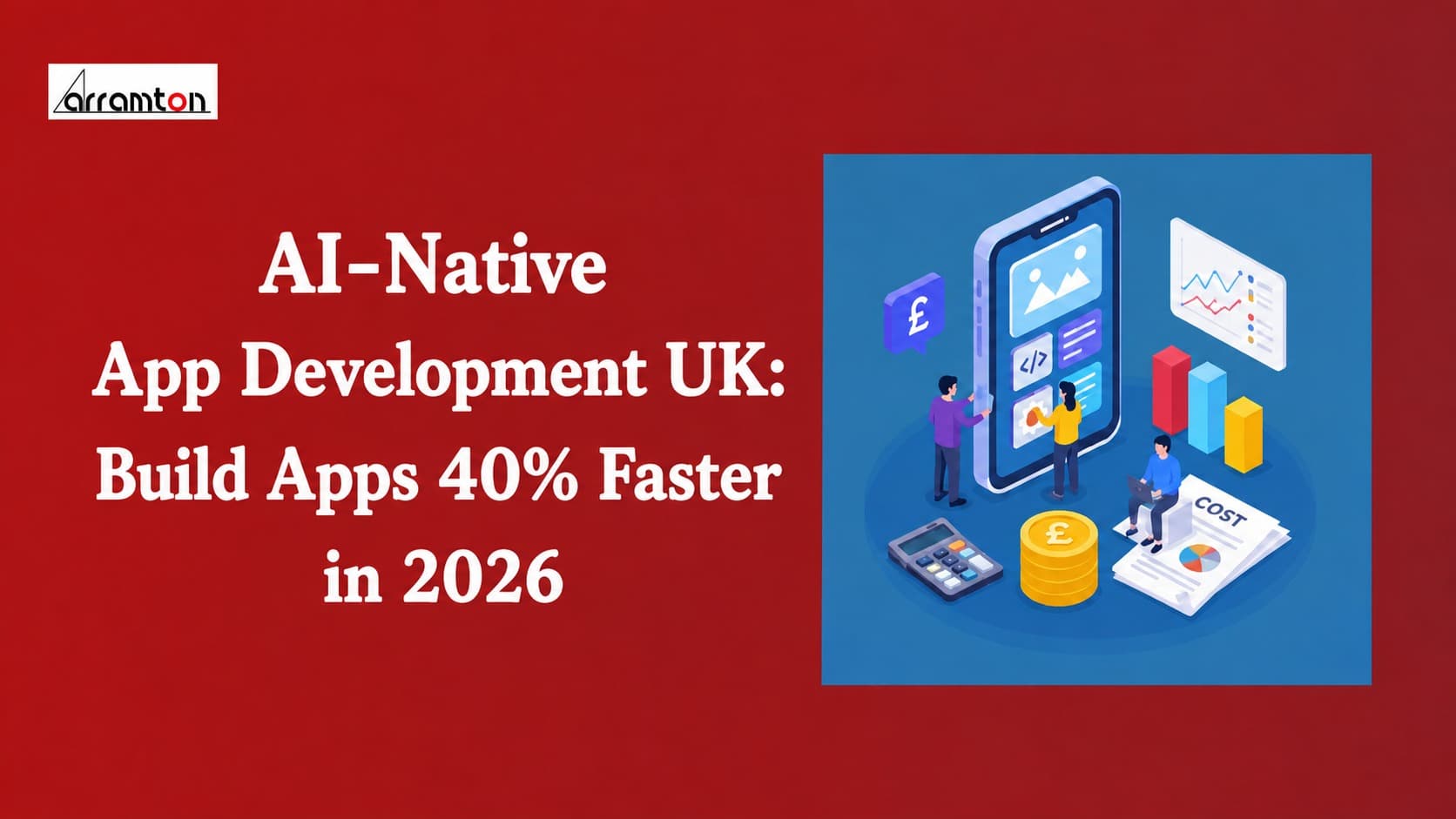
Delivering an app 40% faster directly translates into significant cost savings. If a traditional agency quotes 16 weeks for a project, our AI-native process can often complete it in 10-11 weeks. This means fewer billable hours overall, even at the same hourly rate. For a project requiring 2,000 developer hours, this reduction alone could save hundreds of hours.
Beyond direct hour savings, faster delivery means your product reaches the market sooner. This allows you to start earning revenue or gathering crucial user feedback earlier. The compound effect of this early market entry can far outweigh the development cost savings themselves. For a Series A fintech in New York, launching two weeks earlier than anticipated unlocked a critical funding milestone.
Furthermore, the reduced bug count due to AI-assisted reviews and testing leads to lower maintenance costs post-launch. Fewer critical bugs mean fewer urgent fixes, less downtime, and a more satisfied user base. This proactive approach to quality control saves money and resources in the long run, making the initial investment in AI-native development highly efficient.

Industries We've Delivered AI-Native Apps For
Our AI-native approach isn't limited to specific sectors; its efficiency and quality benefits are universally applicable. We’ve successfully delivered AI-augmented applications for clients in the fintech sector, building complex, secure platforms that require rigorous compliance and rapid iteration. The ability of AI to handle large volumes of code and testing is invaluable here.
In the healthcare industry, we’ve developed apps with stringent data privacy requirements and intricate integrations with existing systems, like NHS digital platforms. AI's role in ensuring code quality and security is paramount in this sensitive domain. For a healthcare provider, we built an app to streamline patient communication, reducing administrative overhead by 30% within six months.
The e-commerce and retail sectors have also benefited from our AI-native methods, creating scalable platforms that can handle high transaction volumes and personalised user experiences. Similarly, logistics and supply chain management companies have seen improvements in operational efficiency through custom-built AI-powered applications. For a Leeds-based e-commerce founder, we enhanced their platform’s search functionality, leading to a 15% increase in conversion rates in the first quarter.
How to Know If Your Agency Is Actually Using AI
Many agencies now claim to use AI, but the reality often falls short. One key indicator is the specificity of their claims. Do they mention concrete tools like GitHub Copilot, Cursor, or AI-driven testing frameworks? Vague statements about 'leveraging AI' are a red flag. Ask them to detail *how* AI is integrated into their daily development sprints and QA processes.
Another sign is the concrete results they can demonstrate. Can they provide metrics on how AI has improved their delivery speed, reduced bug rates, or enhanced code quality for past projects? Look for case studies or testimonials that specifically mention the impact of AI-assisted development. A truly AI-native agency will have measurable outcomes tied to their AI adoption.
The most telling sign is the impact on your project's timeline and budget. If an agency promises speed and efficiency gains due to AI but their estimates are similar to traditional development timelines, it’s a warning sign. Genuine AI-native development should result in demonstrably shorter development cycles and a more cost-effective final product compared to conventional methods. For a Manchester property startup, we delivered their MVP 35% faster than their initial quote from a traditional agency.
Start Your AI-Native App Build: What Happens Next
The journey to building your AI-native application begins with a detailed discovery call. We’ll discuss your project vision, business goals, and technical requirements. This is where we identify how our AI-augmented approach can best serve your specific needs, ensuring alignment from the outset. Our team will then prepare a preliminary project scope and estimate.
Following the initial proposal, we move into a collaborative design and architecture phase. Here, our AI tools assist in generating user flow diagrams and technical specifications, ensuring a robust foundation. You’ll work closely with our product managers and architects to refine the application's structure and user experience, making informed decisions about the technology stack and features.
Once the architecture is approved, the AI-native development sprint begins. You’ll receive regular updates, potentially including access to staging environments where you can see your application evolve. Our transparent process, enhanced by AI-generated reports and AI-assisted communication, ensures you’re always informed and involved. If you’re evaluating partners for this kind of work, Arramton builds AI-native solutions for UK and US companies, focusing on delivering high-quality apps faster and more cost-effectively.
Frequently Asked Questions
What does "AI-native" actually mean for my app project?
AI-native means AI tools are embedded in every stage of our development process — not bolted on as an afterthought. Our developers use GitHub Copilot and Cursor for AI pair-programming, AI-assisted code review catches bugs before they reach QA, automated AI test suites run in parallel with development, and AI tools generate project documentation from sprint recordings. The result for your project: faster delivery, fewer bugs in production, and lower cost per feature compared to a traditional agency working manually.
How much faster is AI-native development compared to a traditional agency?
On average, we deliver projects 30-40% faster than traditional agencies quoting the same scope. A project that a traditional agency quotes at 16 weeks, we typically deliver in 10-11 weeks. This isn't about rushing — it's about AI handling repetitive coding tasks (boilerplate, unit tests, documentation) so senior developers focus entirely on architecture and business logic. Faster delivery also means you start generating revenue or user feedback sooner, which compounds over time.
Does using AI tools mean my app will be lower quality?
No — the opposite. AI pair-programming tools like GitHub Copilot and Cursor act as a second reviewer on every line of code. They flag potential bugs, suggest better implementations, and enforce coding standards automatically. Our senior developers still make all architectural decisions and review every output. The AI handles repetitive patterns; experienced engineers handle everything that requires judgement. Our 4.9★ Clutch rating across 26 delivered apps reflects this quality standard.
Will AI-native development work for a complex enterprise app?
Yes. AI-native development is particularly effective for complex projects because it scales human capacity rather than replacing it. AI handles the volume — generating test coverage, writing integration code, producing documentation — while your dedicated senior engineers handle the complexity. We’ve used AI-augmented development on HMRC-compliant tax automation tools, healthcare apps with NHS integration requirements, and multi-vendor e-commerce platforms. Complexity favours AI-native development because the productivity gain compounds across larger codebases.
What's the cost difference between AI-native and traditional app development?
AI-native development typically costs 20-35% less for the same output because fewer developer-hours are needed to produce the same result. A project requiring 2,000 developer hours traditionally might require 1,300-1,500 hours with AI augmentation — at the same hourly rate, that's a direct cost saving. Combined with our staff augmentation rates starting at £2,800/month versus £6,000-8,000/month for UK-local developers, the total saving for UK companies working with Arramton is typically 40-60% versus a local traditional agency.