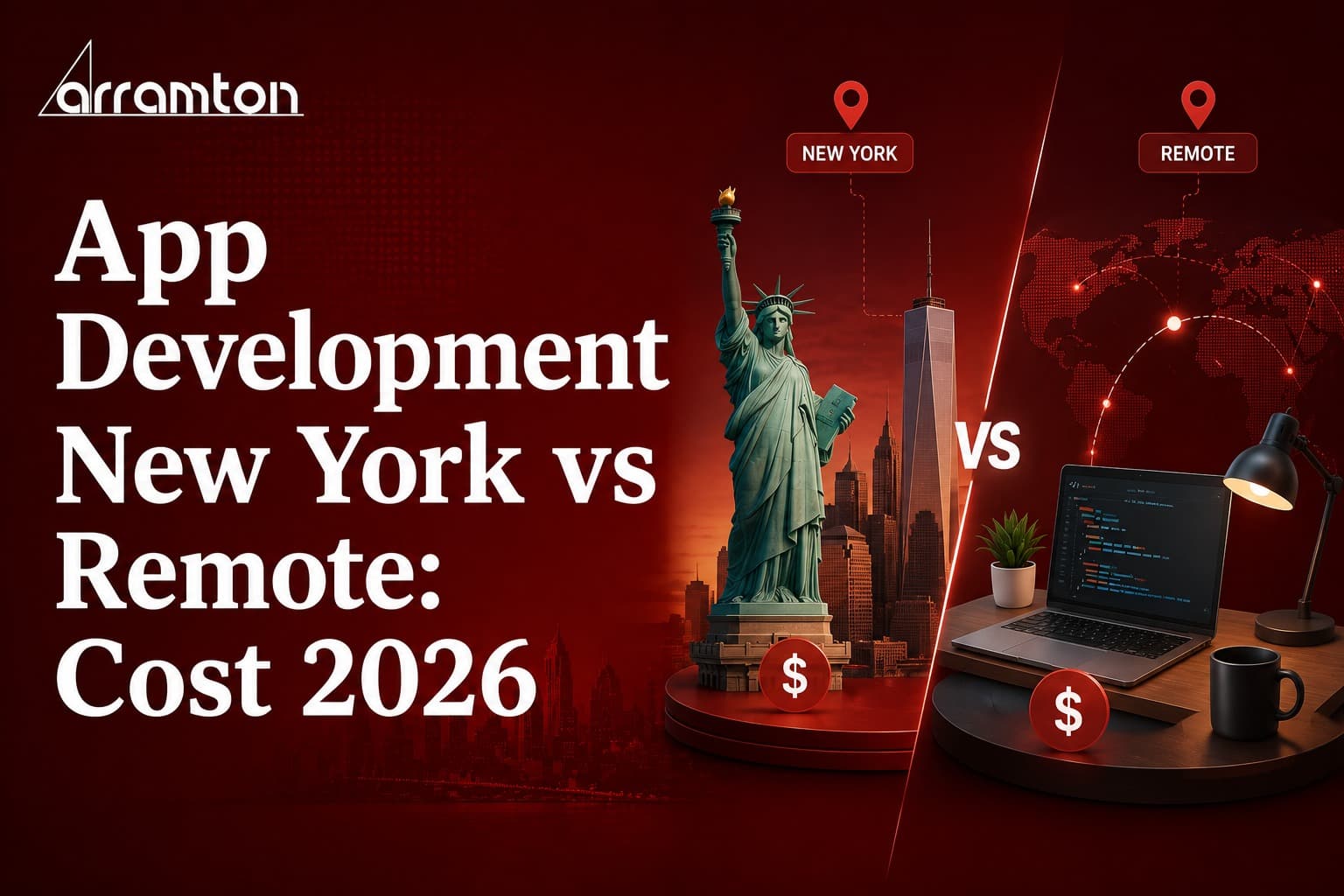
The true cost of building an app in New York versus hiring a remote team in 2026 isn't just about hourly rates. It's about total value, hidden expenses, and the long-term impact on your product.
When a London-based startup founder first approached us about building their fintech app, they were shocked by the quotes from US agencies. We're talking figures upwards of $150,000 for a minimum viable product (MVP). This is before considering the ongoing maintenance and future feature development. It’s a significant sum, especially for early-stage ventures.
NYC Agencies: The Premium Price Tag
New York City is a global hub for tech innovation and boasts some of the world's most prestigious app development agencies. These firms often command top dollar, reflecting their prime location, access to highly experienced (and expensive) local talent, and the perceived prestige of working with a 'local' team.
Expect hourly rates in NYC to range from $150 to $250+, sometimes even higher for highly specialised teams. For a mid-sized app with moderate complexity, a project could easily land between $100,000 and $300,000. This price includes more than just coding; it often encompasses extensive project management, stakeholder meetings, and design workshops conducted in person. This is valuable for some, but not always essential.
The advantage here is proximity. If your team is based in New York, frequent face-to-face meetings can be a significant benefit. Spontaneous brainstorming sessions and immediate feedback loops are easier to facilitate. For businesses where in-person collaboration is a non-negotiable requirement, this premium might be justified.
Hidden Costs with NYC Agencies
Beyond the headline hourly rate, several less obvious costs can inflate the final bill when working with a New York-based agency. These include:
- Higher overheads for the agency (office rent, utilities, extensive marketing budgets), which are passed on to clients.
- Potential for longer, more frequent, and costly in-person meetings that might not be strictly necessary.
- A more formalised, often slower, development process dictated by established agency structures.
For instance, a New York property tech startup discovered their initial app development budget was nearly doubled due to the sheer volume of in-person client workshops deemed 'essential' by their chosen agency, even though most of these could have been handled remotely with modern collaboration tools.
Remote Development Teams: The Value Proposition
Remote development teams, particularly those operating from regions with a lower cost of living but a high standard of technical education, offer a compelling alternative. Hourly rates can be as low as $30 to $70, representing a significant saving without a commensurate drop in quality if you choose wisely.
Arramton, for example, leverages its UK presence for strategic client relations and its established development centre in Delhi. This hybrid model allows us to offer competitive pricing from our Indian team while maintaining UK-based project management and communication standards for our clients in the UK and US. We've seen countless projects thrive with this setup.
The total cost for an MVP using a remote team can range from $40,000 to $120,000, depending on the app's complexity, the team's experience, and the engagement model. This is a substantial saving of 60% or more compared to a comparable NYC agency. It means businesses can either build a more feature-rich MVP or conserve capital for marketing and growth.

The Remote Advantage: Efficiency and Focus
Remote teams are often more focused on efficient delivery. They're adept at asynchronous communication, leveraging tools like Slack, Jira, and Asana to keep projects on track without constant real-time meetings. This can lead to faster development cycles for many types of projects.
A US-based e-commerce founder recently shared how their remote team in Eastern Europe delivered an app update in half the time quoted by a Chicago firm, simply because the remote team was structured for rapid iteration and minimal overhead. They embraced asynchronous updates and deep-dive work blocks.
Furthermore, the talent pool for remote development is global. You're not limited to the developers available within a specific city's commuting radius. This allows access to specialised skills in areas like AI integration or specific cross-platform frameworks that might be scarce or prohibitively expensive locally.
Bridging the Gap: Factors Beyond Location
It's too simplistic to say one is definitively 'better' than the other. The best choice depends heavily on your project's specific needs and your company's culture. Here's a breakdown of key decision factors:
Communication & Project Management
If your project demands constant, in-person collaboration or if your team struggles with remote communication, a local NYC agency might seem safer. However, this is often a self-imposed limitation. Modern communication tools and disciplined project management can make remote collaboration highly effective.
At Arramton, we've seen over 50 projects succeed by embedding UK-based project managers to liaise directly with our Delhi development team. This provides a familiar point of contact for our clients while ensuring efficient onshore-offshore coordination. It balances the need for clear communication with the cost benefits of remote talent.
Have you considered how your current communication overhead impacts project timelines and costs? Often, the 'need' for in-person meetings is more about comfort than necessity.
Time Zone Differences
The biggest practical challenge with remote teams is often the time zone difference. If your New York agency is just a few hours behind you, syncing up for daily stand-ups is easy. With a team in India, there's a significant gap.
This requires careful planning. Scheduling critical meetings requires more foresight. However, most development work doesn't require real-time syncing for 8 hours a day. Development happens while your team sleeps, and you review progress the next morning. It’s about structuring workflows to leverage this time difference, not fight it.
Cultural Nuances & Understanding
While not as significant as it once was, cultural nuances can still play a role. Understanding local market trends or specific consumer behaviours might be easier with a local team.
However, for core app functionality and user experience (UX) design, a skilled remote team with experience in your target market (UK or US) can be just as effective. Many offshore agencies actively recruit talent with experience in your target regions and provide cultural sensitivity training.

The Real Cost Comparison: What's Truly Being Paid?
It’s not just about the dollar amount on the invoice. It’s about the total cost of ownership and the return on investment.
NYC Agencies: The 'Convenience' Premium
You pay a premium for perceived convenience, immediate access, and the assurance of local talent. This is often backed by a more rigid structure and potentially slower iteration cycles for non-critical changes. The risk is paying more for less agility or overpaying for services you don't truly need.
Remote Teams: The 'Efficiency' Advantage
You pay for direct development costs, often with fewer overheads. This translates to faster deployment of features and more budget available for iterative improvements or scaling. The 'cost' here is the effort required in selecting the right partner and establishing robust communication protocols.
For many UK and US startups in 2026, the choice between a New York agency and a remote team boils down to a 60-70% cost saving for remote, which can mean launching a product six months sooner or building a much more robust MVP.
How to Choose the Right Path
Your decision should be guided by these questions:
- What is your absolute maximum budget for the initial build?
- How critical is face-to-face interaction for your team's workflow?
- What is your tolerance for time zone differences in project management?
- Do you have a clear product roadmap, or do you expect frequent, rapid pivots?
- What level of technical expertise do you require, and how easily accessible is it locally vs. globally?
For businesses in the United Kingdom and the United States looking for a balance of cost-effectiveness, high-quality development, and clear communication, a well-managed offshore team with strong onshore project management is increasingly the preferred route.
FAQs
How much does a custom app development company in New York cost in 2026?
In 2026, expect custom app development costs from New York companies to range significantly, typically from $100,000 to $300,000+ for a moderately complex application. This reflects high local talent wages and agency overheads.
What are the typical hourly rates for remote app developers?
Hourly rates for experienced remote app developers can vary widely, but a common range is $30 to $70 per hour. This offers substantial cost savings compared to agencies in major US cities.
Is it cheaper to hire developers in the UK or outsource offshore?
Outsourcing offshore, particularly to regions like India, is generally significantly cheaper than hiring UK-based developers or agencies. The cost difference can be up to 60-70% for comparable services.
What are the main risks of working with a remote development team?
The primary risks involve communication challenges due to time zone differences, potential cultural barriers, and the due diligence required to find a reliable and skilled team. However, these risks are manageable with proper strategy and partner selection.
Can a remote team deliver the same quality as a New York agency?
Yes, a skilled and well-managed remote team can absolutely deliver the same, if not higher, quality of work. The key lies in the partner's expertise, processes, and the client's ability to manage the relationship effectively.
Conclusion
The allure of a New York City app development agency is understandable – proximity, established reputations, and local talent. However, the cost implications for 2026 are substantial, often leading to significantly higher project expenses. For many UK and US startups and SMEs, the smart money is on carefully selected remote development teams. They offer a path to building high-quality apps with a more predictable budget and often a faster time to market, without compromising on the essential elements of successful software development.
If you're evaluating partners for building your next app, especially if you’re a UK or US-based business seeking value without sacrificing quality, Arramton builds custom software solutions for companies aiming for global reach.