The truth is, most US companies grappling with software development talent challenges don't know the real cost of hiring versus augmenting.
By 2026, the average base salary for a senior full-stack developer in San Francisco will likely hover around $160,000-$180,000 annually, before factoring in benefits, taxes, and overhead. That's just for one developer. For a growing startup, especially Series A or B, this figure can balloon to well over $250,000 per head per year when you add 30-40% for full-time employment costs. It’s a massive financial commitment and a significant operational hurdle. Have you considered the total cost beyond just the salary? It’s easy to fixate on the salary number, but the true expense runs far deeper. This article cuts through the noise, delivering a candid look at what it actually costs to staff a tech team in the USA, and where staff augmentation offers a smarter, more predictable path.
The Sky-High Cost of Direct Hiring in the USA
National Averages Obscure the Real Picture
While national salary averages for software developers in the USA might seem manageable, they’re a dangerous oversimplification. The reality is vastly different depending on location, specific tech stack, and experience level. A mid-level .NET developer in Omaha, Nebraska, might command $100,000 annually. The same developer in New York City could easily require $140,000+. This regional disparity isn't just about cost of living; it's about the sheer concentration of demand in tech hubs.
Beyond Salary: The Hidden Costs of Full-Time Employees
Direct hiring isn't just about the base salary. You're also looking at:
- Health insurance premiums (often $15,000–$20,000 per employee annually)
- Retirement plan contributions (e.g., 401(k) matching)
- Paid time off (vacation, sick days, holidays — typically 15–25 days)
- Payroll taxes (employer’s share)
- Recruitment fees (agencies can charge 15–25% of first-year salary)
- Onboarding and training costs
- Office space, equipment, and software licenses
When you tally these up, a developer earning $120,000 might actually cost your business $180,000 to $200,000 annually. For a fintech startup in Austin needing a team of five backend engineers by Q4 2025, this overhead is staggering.
The Recruitment Black Hole
Finding the right talent is a drawn-out, costly process. Many companies spend months sifting through CVs, conducting multiple interview rounds, and dealing with candidates who go silent. A significant number of hiring managers report spending 20+ hours per week on recruitment activities alone. This is time that could be spent on product strategy or core business development. What's the opportunity cost of a developer role sitting vacant for six months?

Staff Augmentation: A Predictable Alternative
What is Staff Augmentation, Really?
Staff augmentation isn’t just about hiring remote developers; it’s a strategic model for scaling your team with pre-vetted professionals who integrate seamlessly with your in-house staff. These aren't contractors who do isolated tasks; they become part of your extended team, working under your direct management on your projects. It’s about flexibility and access to a global talent pool without the burdensome overhead of traditional employment.
The All-Inclusive Cost of Augmentation
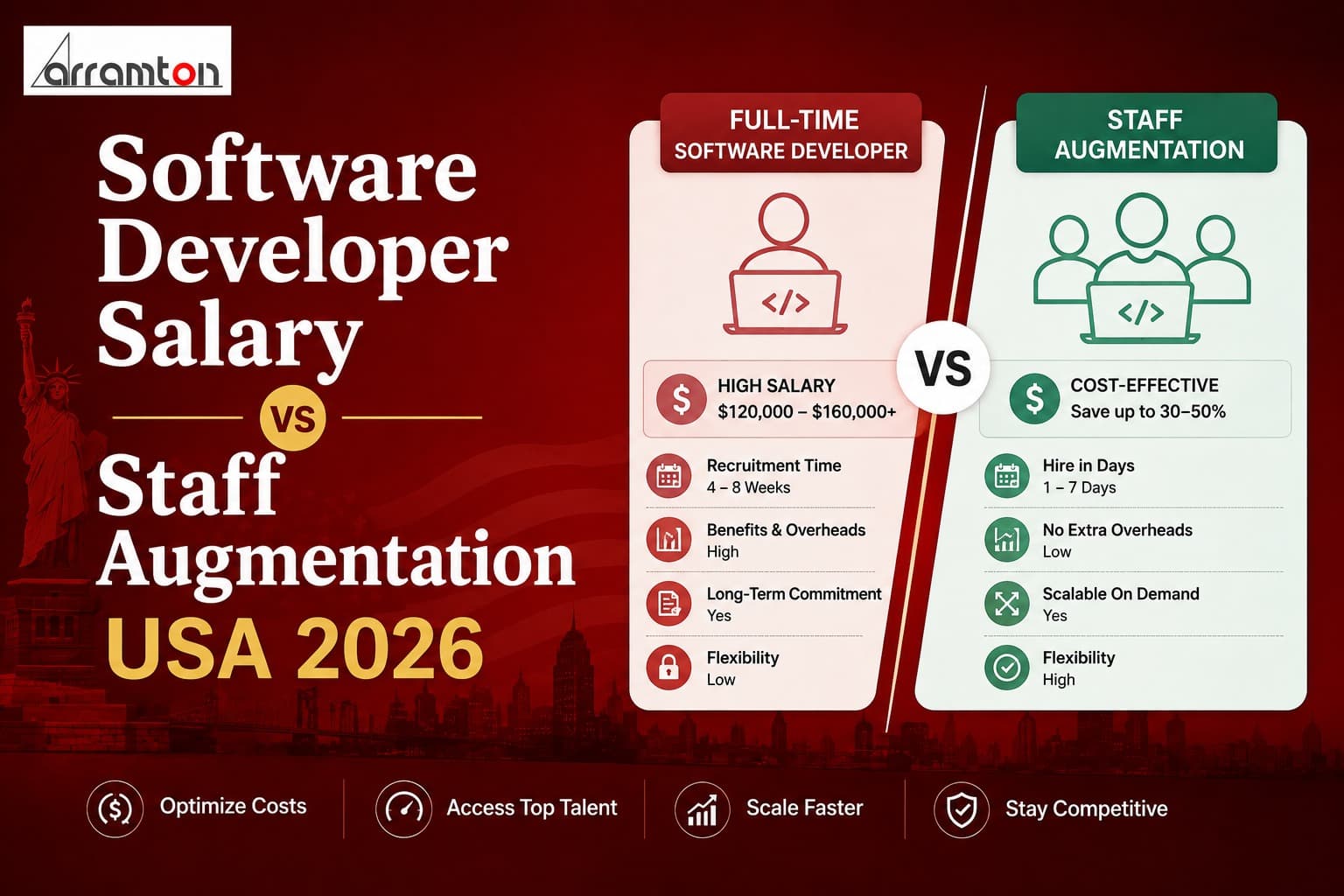
When you engage a staff augmentation partner, the hourly or monthly rate typically covers everything. This means the developer's salary, benefits, taxes, recruitment, and even the operational costs associated with their employment. The primary differentiator then becomes the partner’s service fee, which is usually a fraction of the costs associated with direct hiring. For example, an augmented senior React Native developer might cost $70–$100 per hour, inclusive of all these factors. That's significantly lower than the estimated $150-$200+ per hour equivalent cost of a US-based full-time employee.
Speed to Market: A Critical Advantage
One of the most compelling benefits of staff augmentation is speed. Instead of months of recruitment, you can typically have a qualified developer join your team within 1–3 weeks. This rapid scaling capability is vital for startups needing to iterate quickly on their MVP or for established businesses facing tight deadlines. A Boston-based e-commerce company recently needed to add three QA engineers to their team urgently for a Black Friday launch. By using staff augmentation, they onboarded the necessary talent within 10 days, a feat impossible with direct hiring.
Comparing the True Costs: Salary vs. Augmentation
Scenario: Hiring a Senior Python Developer in the USA (2026)
Let’s break down the annual cost for a senior Python developer, based on realistic 2026 projections:
| Cost Component |
Direct Hire (USA) |
Staff Augmentation (via Arramton) |
| Base Salary |
$140,000 |
*Included in hourly rate* |
| Benefits & Taxes (35%) |
$49,000 |
*Included* |
| Recruitment Costs (15%) |
$21,000 (One-time, amortised) |
*Included* |
| Office Space/Overhead (10%) |
$14,000 |
*Included* |
| Total Estimated Annual Cost |
$224,000 |
$98,000 - $120,000 (based on $70-$90/hr) |
The figures here are illustrative but grounded in experience. At Arramton, we’ve managed this comparison across dozens of projects for UK and US tech firms, consistently finding augmentation offers a 40-50% cost saving for equivalent roles. The difference is substantial, freeing up capital for product development and marketing.
The ROI of Flexibility
Beyond direct cost savings, staff augmentation offers a superior return on investment through agility. You can scale your team up or down based on project needs, avoiding the costly process of layoffs during leaner periods. This flexibility is invaluable for businesses operating in dynamic markets. For a SaaS company in Denver launching a new feature set, the ability to quickly bring on specialized developers without long-term commitments is a strategic advantage.

Common Pitfalls to Avoid When Considering Augmentation
Myth 1: Quality Compromise
A pervasive myth is that augmented developers are less skilled. This isn't true if you partner with a reputable firm. Leading augmentation providers rigorously vet their talent pool, often having their own internal training and quality assurance processes. The key is selecting a partner whose recruitment and vetting standards align with your own expectations for quality. Don't assume all augmentation services are equal; due diligence is paramount.
Myth 2: Communication Barriers
This was a larger issue a decade ago. Today, with advanced collaboration tools (Slack, Zoom, Jira, Asana) and a global shift towards remote work, communication barriers are minimised. Successful augmentation hinges on clear communication protocols, regular check-ins, and defined project management methodologies. A US-based Product Manager working daily with augmented developers in India experience minimal friction when the process is well-defined.
Myth 3: Lack of Control
With staff augmentation, you maintain direct control over your augmented team members. They report to your project managers, follow your workflows, and contribute to your product roadmap just as any in-house employee would. You define tasks, set priorities, and manage their day-to-day activities. It’s not outsourcing where you hand off a project; it’s extending your existing team.
The 2026 Outlook: Talent Scarcity Continues
Why the US Talent Market Isn't Getting Easier
The demand for skilled software developers in the USA is projected to continue outpacing supply. The rapid growth of AI, machine learning, and cloud-native applications only exacerbates this. Junior developer roles might see more candidates, but experienced engineers with niche skills in areas like cybersecurity or specific cloud platforms remain exceptionally scarce. This scarcity drives up salaries and makes the hiring process even more competitive and prolonged. A report by the Bureau of Labour Statistics estimates that demand for software developers will grow 25% from 2022 to 2032, much faster than the average for all occupations.
Global Talent: The Smart Strategy
Given this persistent talent scarcity and rising costs in the USA, looking globally for talent is no longer optional; it's a strategic imperative. By leveraging staff augmentation, you tap into a worldwide pool of highly skilled, motivated developers who are ready to contribute to your projects. This opens up access to expertise that might be prohibitively expensive or simply unavailable domestically.

Frequently Asked Questions
What is the average salary for a senior software developer in the US in 2026?
In 2026, expect senior software developer salaries in the US to range from $130,000 to $180,000 annually, with top-tier tech hubs like Silicon Valley, New York, and Seattle commanding figures at the higher end or even exceeding it, depending on specialisation.
How much does staff augmentation typically cost per hour?
Hourly rates for staff augmentation in 2026 typically range from $50 to $120 per hour, depending on the developer's experience, skillset, and the partner's service level. This rate is all-inclusive, covering salary, benefits, and operational overhead.
Is staff augmentation cheaper than hiring full-time employees in the US?
Yes, significantly. While direct hiring involves base salary plus 30-40% for benefits, taxes, and overhead, staff augmentation rates are all-inclusive and often result in a 40-50% cost saving for equivalent roles.
What's the difference between staff augmentation and outsourcing?
Staff augmentation is about adding individual developers to your existing team who you directly manage. Outsourcing typically involves delegating an entire project or function to a third-party vendor, with less direct control over the individuals performing the work.
The Verdict: Augmentation for Predictable Growth
The decision between direct hiring and staff augmentation in the US for 2026 and beyond isn't just about immediate cost. It's about building a sustainable, scalable, and agile tech team. While hiring full-time developers offers direct control and company culture integration, the rising salaries, extensive benefits packages, and lengthy recruitment cycles present significant challenges for many businesses, especially startups and SMEs.
US businesses spend an average of 15–25% of a developer's annual salary on recruitment fees and related overheads, a cost that can be entirely avoided with staff augmentation.
Staff augmentation provides a predictable, cost-effective way to access top global talent, allowing you to scale rapidly without the financial and operational burdens of traditional hiring. If you're evaluating partners for this kind of work, Arramton builds scalable engineering teams for UK and US companies, providing dedicated developers integrated directly into your workflow. Explore how staff augmentation can accelerate your development.