Most UK startup CTOs agonise over React Native versus Flutter. The problem isn't choosing the 'best' framework; it's understanding which one aligns with your specific technical team, market goals, and crucially, your budget runway. Get this wrong, and you could be looking at a 30% increase in development costs or a six-month delay to your MVP launch. In 2026, the landscape is mature, the trade-offs are clearer, and knowing them could save your startup weeks of development and tens of thousands of pounds.
Why This Decision Matters More Than Most Startup CTOs Think
Choosing between React Native and Flutter for your mobile app isn't just a technical tick-box exercise. It's a strategic decision that impacts your hiring strategy, development speed, user experience, and ultimately, your ability to secure further investment. For a UK startup with a lean budget and tight deadlines, the framework choice can be the difference between a successful market entry and a costly pivot.
The core issue is that many founders or even CTOs focus on the framework's features in isolation, ignoring how it fits their existing team's skillset, their hiring pool in the UK, and the long-term maintenance overhead. This often leads to costly rework or choosing a framework that, while popular, isn't the most efficient for their immediate needs.

Quick Summary: React Native vs Flutter in 2026
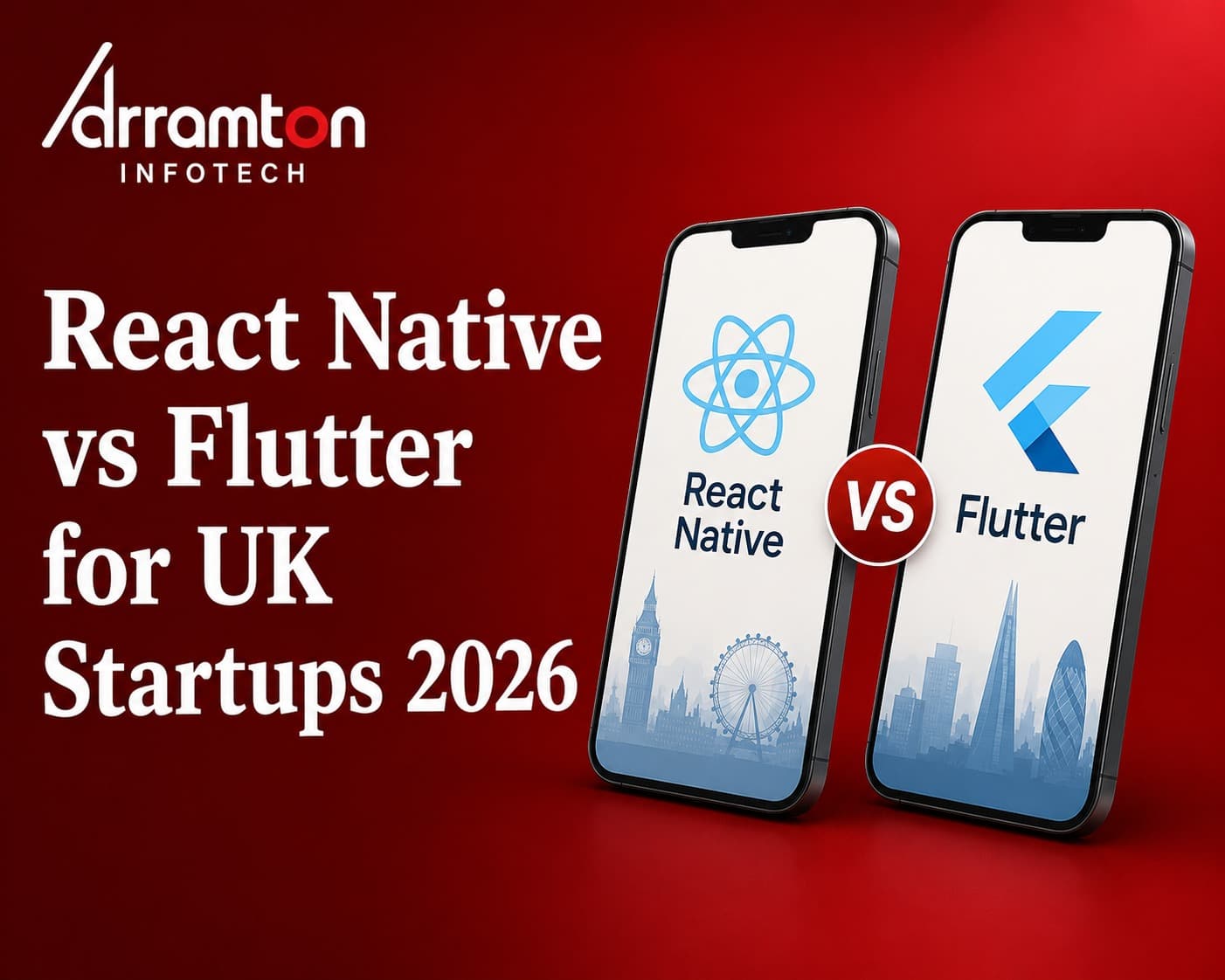
In 2026, React Native and Flutter are both mature, capable cross-platform frameworks. React Native, built by Facebook (Meta), leverages JavaScript/TypeScript and offers a near-native experience by bridging to native UI components. Flutter, developed by Google, uses Dart and renders its own UI widgets, promising high performance and consistent visuals across platforms.
React Native is often chosen for projects where a team already has strong JavaScript expertise or needs to integrate with existing native codebases. Flutter excels in applications demanding highly custom UI, complex animations, and a consistent look and feel across iOS and Android from day one.
The choice hinges on your team's existing skills, the complexity of your UI, performance requirements, and your hiring strategy within the UK market.
Cost Comparison: React Native vs Flutter for a UK MVP
When building an MVP, cost is paramount for UK startups. Generally, development costs are comparable between React Native and Flutter, primarily driven by developer salaries and project complexity, not the framework itself. However, subtle differences emerge.
React Native development can be slightly cheaper if your team already comprises experienced JavaScript or React developers, as it minimises the learning curve. Conversely, if you're starting from scratch, Flutter's highly opinionated structure and hot reload feature can speed up initial UI development, potentially reducing time-to-market and, by extension, cost for the MVP phase. We've seen initial Flutter MVPs come in around 10–15% faster for teams new to both.
A standard MVP built with either framework in the UK typically ranges from £20,000 to £45,000, with the largest cost variable being the hourly rate of the development team and the complexity of the core features, not the framework itself.

Developer Availability in the UK: Which Is Easier to Hire?
For UK startups, the availability of local talent is a critical consideration. React Native has a significant advantage here due to its foundation in JavaScript, a widely adopted language in the UK tech scene. Many web developers can transition to React Native with a relatively short ramp-up period.
Flutter, while growing rapidly, still has a smaller pool of dedicated developers in the UK compared to React Native. However, this gap is closing, especially as more companies invest in the technology. For staff augmentation, React Native often presents more immediate hiring options within the UK's existing developer market.
If your primary focus is accessing the largest pool of skilled developers locally in the UK, React Native has the edge. If you're open to hiring talent in regions with strong Flutter adoption like South Asia, your options broaden considerably.
Performance: When the Difference Actually Matters
Both React Native and Flutter can deliver excellent performance, often indistinguishable from native apps for most use cases. However, for highly demanding applications, especially those with complex UI animations, real-time data visualisations, or graphically intensive interfaces, Flutter often demonstrates a performance advantage.
This is because Flutter renders its own UI widgets directly on a Skia graphics engine, bypassing the need for a JavaScript bridge to native components. This direct rendering path can lead to smoother animations and higher frame rates. For fintech apps with intricate charts or games, Flutter can provide a measurably superior user experience.
For standard business applications, e-commerce platforms, or utility apps, the performance difference between React Native and Flutter is usually negligible and won't impact the end-user experience meaningfully.
UI Consistency: Flutter Wins, But React Native Has Caught Up
Flutter's core strength lies in its self-contained widget system. This means the UI elements look and behave identically on both iOS and Android from the outset, offering unparalleled visual consistency. This is a major plus for brands that require a pixel-perfect, unified look across all platforms.
React Native has made substantial strides in UI consistency. With improvements in its rendering pipeline and a vast array of third-party UI libraries, it's now much easier to achieve a consistent look and feel. However, Flutter still holds a slight edge in guaranteeing identical UI behaviour across different operating systems without significant customisation effort.
For a UK startup prioritising an identical brand aesthetic across platforms without extensive design work, Flutter remains the more straightforward choice.
Ecosystem and Libraries: What's Available for UK Business Use Cases
Both frameworks boast vibrant ecosystems with a wealth of libraries and tools that cater to common business needs. React Native benefits from the immense JavaScript ecosystem, providing access to countless packages for everything from state management to networking. Its maturity means many established libraries are well-tested and widely documented.
Flutter's ecosystem is growing rapidly, with many high-quality packages available for common tasks. Google actively supports Flutter's core libraries, and the community is continually expanding its offerings. For specific integrations like advanced device hardware access or niche backend services, you might find more mature solutions in the JavaScript world initially.
However, for most UK startup requirements, from user authentication to data synchronisation, both frameworks offer robust solutions.
React Native for UK Startups: Best Fit Use Cases
React Native is an excellent choice for UK startups that:
- Have a team with existing JavaScript or React expertise.
- Need to leverage a vast number of existing JavaScript libraries and tools.
- Are building an app that requires deep integration with native platform features or existing native codebases.
- Prioritise hiring from the largest available pool of developers in the UK.
- Are developing apps where absolute UI consistency across platforms isn't the absolute top priority, but near-native performance is key.
Think of e-commerce apps, social media platforms, or utility applications where a strong existing web presence or a readily available talent pool is more critical than a perfectly uniform UI look.
Flutter for UK Startups: Best Fit Use Cases
Flutter shines for UK startups that:
- Require highly custom, animated, and visually rich UIs.
- Prioritise a consistent look and feel across iOS and Android from day one.
- Are building apps where high performance for animations and graphics is crucial (e.g., games, complex data visualisations).
- Have a team willing to learn Dart or are bringing in new talent with Flutter experience.
- Are building an MVP where rapid UI development can significantly reduce time-to-market.
Examples include educational apps with interactive elements, creative portfolio apps, or performance-intensive games.
The Wrong Way to Make This Decision
The most common mistake UK founders make is choosing a framework based on hype, personal preference, or what the agency pitches without considering their team's actual skillset or the long-term implications. Another error is assuming one is definitively 'better' than the other, leading to a bias that ignores the specific needs of the project.
Building an app is a significant investment. Rushing this decision or letting external factors override internal capabilities is a recipe for increased costs and delayed timelines. It's crucial to conduct a thorough evaluation based on your team's current strengths and your business objectives.
Which Framework Does Arramton Recommend for UK Startup MVPs?
At Arramton, we've guided over 50 UK and US startups through this decision, building everything from e-commerce platforms to complex SaaS products. Our recommendation for UK startup MVPs often leans towards React Native. This is primarily due to the availability of skilled JavaScript developers within the UK market, which translates to faster hiring and potentially lower initial development costs. This speed and access to talent are critical for getting an MVP to market swiftly.
However, we strongly advocate for Flutter when the project demands highly custom UIs, complex animations, or absolute visual consistency across platforms from the start, and the team is prepared for that specialised skillset. The final choice is always data-driven, considering the specific constraints and goals of each unique business.
FAQs
Is React Native or Flutter faster to build an MVP with in 2026?
Both are comparable for MVP speed. Flutter gives faster initial UI development because its widget system is self-contained and consistent across platforms. React Native gives faster iteration if your team already knows JavaScript/TypeScript — no context switch. For a complete stranger to both: Flutter typically produces a working MVP 10–15% faster in our experience, because developers spend less time debugging platform-specific UI differences.
Which framework has more UK developers available in 2026?
React Native has a larger UK developer pool because it uses JavaScript, which far more UK developers already know. Flutter developers are less common but growing — especially in companies that invested in Flutter early (2020–2022). For staff augmentation, React Native gives you more hiring options within the UK; Flutter gives you more options in South Asia and Eastern Europe where adoption is stronger.
Does Flutter or React Native perform better for complex UK fintech apps?
Flutter has a performance edge for UI-heavy apps because it renders its own widgets rather than using native components, removing a layer of abstraction. For fintech apps with complex animations, real-time data displays, and charting, Flutter is measurably smoother. For a standard fintech app (account management, payments, KYC flow), the performance difference is not meaningful enough to drive the framework decision.
Which is better for UK apps that need to comply with NHS or government accessibility standards?
Flutter has made significant progress on accessibility (Semantics API, screen reader support) but React Native still has a slight edge for WCAG 2.2 compliance because it uses native components that inherit platform accessibility features automatically. For apps going through NHS DTAC or government accessibility audits, React Native typically requires less custom accessibility work.
Conslusion
Can you switch from React Native to Flutter (or vice versa) mid-project? You can, but it is expensive and disruptive — typically equivalent to rebuilding from scratch. Do not start with one and plan to switch. The decision should be made in the discovery phase based on your team, use case, and long-term maintenance plan, not revisited after development begins.
If you're evaluating partners for this kind of work, Arramton builds cross-platform mobile applications that scale for UK and US companies, ensuring your technology choice directly supports your business objectives. Learn more about our custom software development services.