Most UK businesses looking to scale their tech teams face a stark choice: hire directly or look to external partners. But what if there's a middle ground that offers flexibility and specialised talent without the long-term commitment? That middle ground is staff augmentation, a model that's rapidly reshaping how companies build and manage their development capabilities, especially as we look towards 2026.
Staff Augmentation Explained: More Than Just Hiring
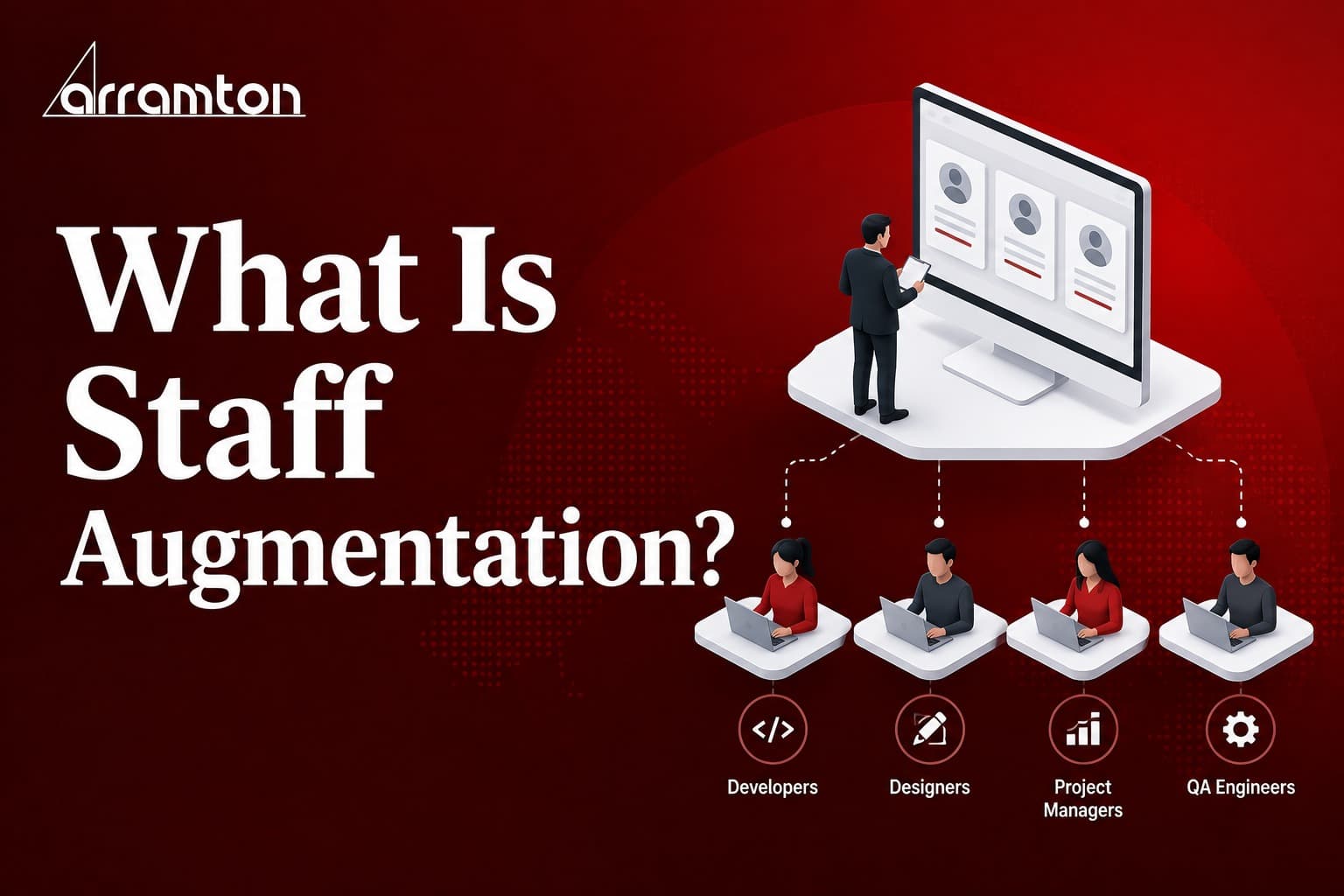
Staff augmentation is a flexible talent strategy where you hire external developers or IT professionals to supplement your existing in-house team. Think of it as bringing in specialised skill sets for specific projects or to fill temporary gaps, working seamlessly alongside your permanent employees. It's not about replacing your core team, but about enhancing it with targeted expertise precisely when and where you need it.
The Core Difference: Augmentation vs. Outsourcing
This distinction is crucial. When you outsource a project, you typically hand over the entire task or function to a third-party vendor, who manages the process and deliverables. With staff augmentation, you retain direct control over the project and the augmented team members. They report to your management, integrate with your workflows, and become an extension of your internal operations, offering greater transparency and alignment with your company's strategic goals.
For a London-based startup founder struggling to find niche skills, this means you're not just buying a service; you're gaining dedicated individuals aligned with your vision. This approach is particularly valuable for innovative projects where direct oversight and rapid iteration are key.
Why UK Companies Are Turning to Staff Augmentation in 2026
The UK tech scene is dynamic, but finding and retaining top talent can be a persistent challenge. Staff augmentation addresses several critical pain points:
Rapid Scaling Without The Overhead
Building a full-time tech department from scratch is costly and time-consuming. You're not just looking at salaries; there are recruitment fees, benefits, training, and HR overheads. Staff augmentation allows you to scale your team up or down almost instantly, adapting to project demands without the long-term financial commitment of permanent hires. This agility is vital for businesses facing fluctuating project pipelines.

Access to a Global Talent Pool & Niche Skills
The UK market, while strong, doesn't always have an immediate supply of every specialised skill needed. Staff augmentation opens doors to a global pool of developers. Whether you need a senior iOS app development specialist with experience in SwiftUI, a data engineer proficient in Apache Spark, or a blockchain expert, you can find them through augmentation partners. At Arramton, we've seen this pattern across over 50 projects — companies consistently underestimate the scarcity of truly senior developers in niche technologies like AR/VR or advanced AI integration.
This means a Manchester-based property tech firm can access a world-class AI specialist based in India, accelerating their product development significantly. It's about finding the right expertise, not just the closest talent.
Cost-Effectiveness and Budget Control
When managed effectively, staff augmentation can be more cost-effective than traditional hiring. While you're paying a premium for specialised skills and the flexibility offered, you avoid many of the associated long-term costs. You also gain predictable budgeting, as augmented staff costs are usually tied to project phases or defined periods. A standard full-time senior developer in London might cost upwards of £75,000-£90,000 annually, plus on-costs. An augmented developer from a trusted partner might offer a comparable skill set for a project-based rate that, when amortised, provides significant savings.
Enhanced Project Focus and Productivity
By filling skill gaps and supporting overloaded internal teams, staff augmentation allows your core employees to focus on their strategic responsibilities. This prevents burnout and ensures that critical internal functions remain a priority, while external experts handle specialised tasks. It’s about enabling your existing team to do what they do best, rather than diverting their attention to tasks outside their core competencies.
Common Staff Augmentation Models
There are a few common ways companies engage with staff augmentation:
- Dedicated Teams: A full team of developers works exclusively on your project, managed by you or an intermediary.
- Time & Materials: You pay for the actual time and resources consumed, ideal for projects with evolving scopes.
- Fixed Price (for specific, well-defined modules): While less common for pure augmentation, some projects might have fixed-price components.

Staff Augmentation in Action: UK Scenarios for 2026
Let's look at how UK businesses are using staff augmentation effectively:
Scenario 1: Scaling an E-commerce Platform
A growing e-commerce business in Birmingham needs to implement a complex new recommendation engine and upgrade their payment gateway before the crucial Q4 sales period. Their in-house team is stretched thin managing daily operations and existing features. They engage a staff augmentation partner to bring on board two backend developers with expertise in Python and AWS infrastructure for a six-month contract.
This allows the e-commerce company to launch the new features on time, significantly boosting sales, without needing to undertake a costly and time-consuming recruitment process for highly specialised roles they might not need post-peak season.
Scenario 2: Building a FinTech MVP
A fintech startup in Edinburgh is developing a new mobile banking application. They have a strong product vision but lack experienced native iOS and Android developers. Instead of hiring full-time, they opt for staff augmentation, bringing in two senior mobile developers – one iOS (Swift) and one Android (Kotlin) – who integrate directly into the startup's agile workflow. The founders retain full control over product direction and sprint planning.
This approach accelerates their Minimum Viable Product (MVP) development, allowing them to secure further investment faster. The augmented developers work as part of the core team, contributing to architecture decisions and best practices, which is crucial for a secure financial application.
Scenario 3: Enhancing a SaaS Product
A SaaS company based in Bristol is experiencing rapid user growth. Their internal team is struggling to keep up with feature requests and performance optimisation for their web application built on Node.js and React. They decide to augment their team with two full-stack developers who can also contribute to their DevOps pipeline and cloud infrastructure management on Azure.
This allows them to maintain a high pace of feature delivery and ensure the platform remains stable and performant under increased load. It also frees up their senior engineers to focus on architectural enhancements and future strategic roadmapping.
The Cost of Staff Augmentation in the UK (Estimates for 2026)
Pricing for staff augmentation varies significantly based on the developer's skill set, experience level, location, and the provider's overhead. However, here are some estimated monthly rates for augmented developers in the UK market for 2026:
- Junior Developer: £3,000 - £4,500 per month
- Mid-Level Developer: £4,500 - £6,500 per month
- Senior Developer: £6,000 - £9,000+ per month
- Specialist Roles (e.g., AI/ML, Blockchain): £8,000 - £12,000+ per month
It's vital to remember that these are estimates. Rates can be higher for onshore UK developers and lower for offshore talent, with offshore often offering the best value for money when partnering with a reputable agency. For example, a senior full-stack developer from India, expertly vetted and onboarded by a trusted UK-based partner like Arramton, might cost a UK company between £4,500-£6,000 per month, offering substantial savings compared to hiring locally.

Key Considerations for Choosing a Staff Augmentation Partner
Not all augmentation providers are created equal. Here's what to look for:
- Vetting Process: How thoroughly do they screen developers? Do they assess technical skills, communication, and cultural fit?
- Transparency: Do you have direct contact with the developers? Are you aware of their progress and challenges?
- Flexibility: Can you scale your team up or down easily? What are the contract terms?
- Location & Time Zones: Consider how time zone differences might impact collaboration.
- Legal & Compliance: Ensure they handle contracts, payroll, and compliance correctly, especially for cross-border arrangements.
At Arramton, we've facilitated staff augmentation for over 30 businesses, consistently finding that the most successful partnerships are built on clear communication, shared goals, and rigorous developer vetting.
FAQs
What's the main benefit of staff augmentation for UK businesses?
The primary benefit is gaining access to specialised talent quickly and flexibly, allowing businesses to scale development capabilities without the lengthy recruitment process and overheads of permanent hires.
How does staff augmentation differ from outsourcing in the UK?
Staff augmentation integrates external professionals into your existing team, under your direct management. Outsourcing typically involves a third-party company managing an entire project or function with their own team and processes.
Can I hire staff augmentation developers for short-term projects?
Yes, staff augmentation is highly flexible. It's ideal for short-term projects, peak periods, or specific skill-gap needs, offering a more agile solution than permanent hiring.
What are typical monthly costs for staff augmentation in the UK?
Monthly costs for augmented developers in the UK typically range from £3,000 for junior roles to £9,000+ for senior or specialist roles, with significant variations based on location and expertise.
The Verdict: Augment Your Potential in 2026
The landscape of building and scaling tech teams is evolving. For UK businesses aiming for agility, cost-efficiency, and access to specialised talent, staff augmentation presents a compelling solution. It's not merely about filling seats; it's about strategically extending your team's capabilities to meet complex project demands and drive innovation.
If you're evaluating partners for this kind of work, Arramton builds dedicated tech teams for UK and US companies, focusing on seamless integration and high-quality talent that accelerates your business goals.