The promise of faster development and lower costs often leads US CTOs to consider IT staff augmentation or outsourcing. But what’s the actual difference when you're building at pace, and which model truly serves your 2026 roadmap? Get it wrong, and you'll spend an extra £20,000 annually on mismanaged teams. Get it right, and you'll hit your product milestones without the hiring headaches.
Understanding the Core Models: Beyond Buzzwords
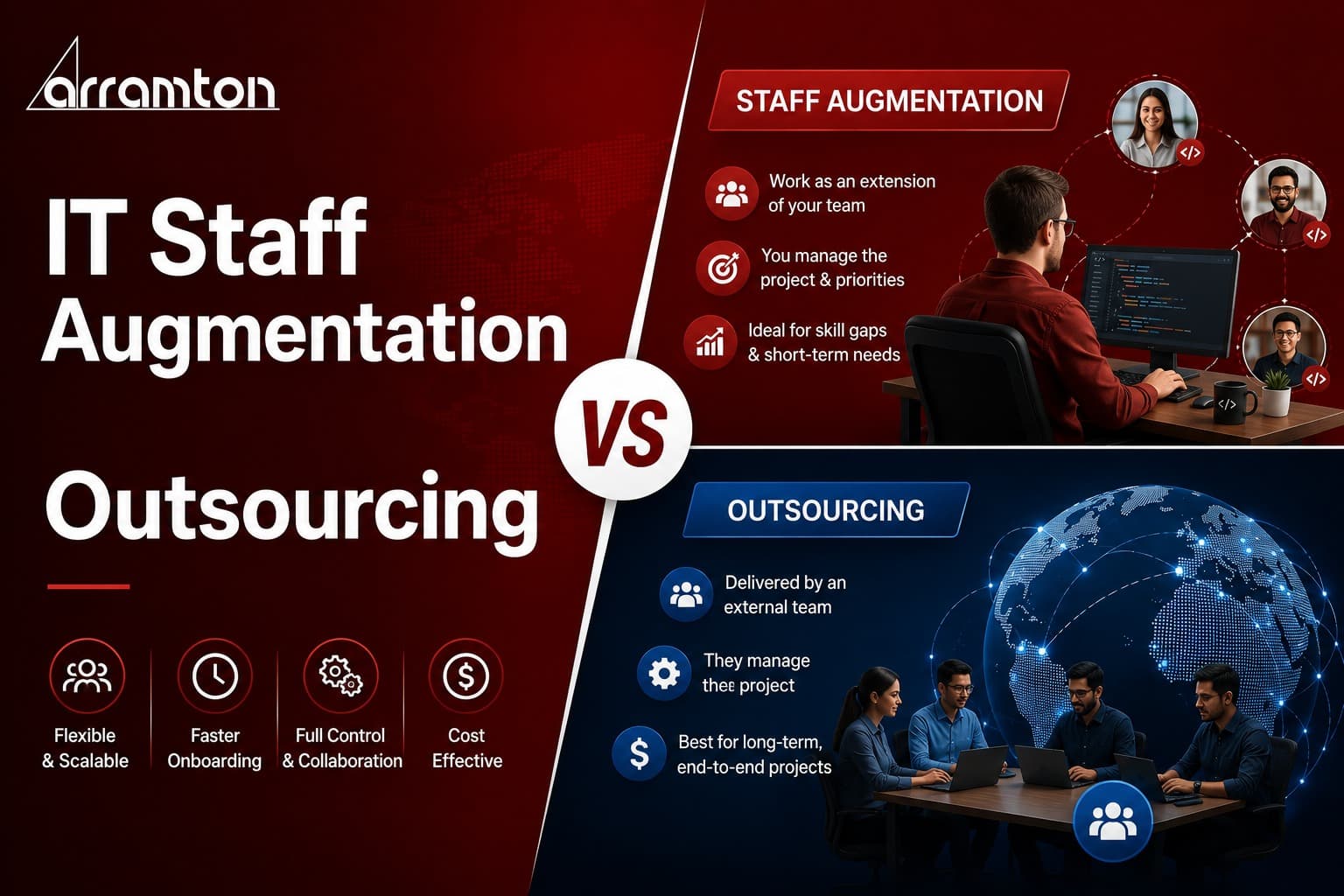
Let’s cut through the jargon. Staff augmentation means integrating external developers into your existing team, reporting to your managers, using your tools. Outsourcing, conversely, means handing over a defined project or function to a third-party vendor who manages the entire process and team. They’re fundamentally different operational approaches.
Think of it like building a house. Staff augmentation is hiring a specialist plumber who works directly alongside your architect and site manager, following their exact plans. Outsourcing is hiring a general contractor who takes on the entire project, managing all trades and delivering a finished house to your specifications.
IT Staff Augmentation: Your Extended Team
This is about scaling your internal capacity with external talent. You gain access to skilled developers, QA engineers, or project managers without the lengthy recruitment process or long-term overhead. The key is that your internal leadership retains direct control.
For a US Series A fintech needing to rapidly build out its core banking platform, this means adding two senior React developers to their existing in-house team. They’ll work on sprints dictated by the CTO, attend daily stand-ups, and be part of the company’s engineering culture. This model is ideal when you have a clear tech vision and a strong internal management structure but lack the specific expertise or bandwidth.
When to Opt for Staff Augmentation
If you’re building a unique product that requires deep integration with your core business logic, augmentation shines. It’s also beneficial when you need to fill niche skill gaps, such as a specific blockchain protocol or a niche AI framework, and want those individuals embedded within your strategic planning. For a London-based SaaS company looking to add real-time analytics capabilities to their platform, hiring two dedicated data engineers on a contractual basis makes sense. They’ll report to the Head of Product and integrate with the existing backend team.
Potential Pitfalls of Augmentation
The main challenge here is integration. If your internal team isn’t prepared for new members, onboarding can be slow. Cultural clashes can also arise if not managed. Furthermore, if your internal management structure is weak, the augmented developers might lack clear direction, leading to wasted hours and budget. A common mistake is assuming external developers will intuitively understand your company’s undocumented processes. Expect to invest time in clear communication and documentation.
Outsourcing: Project Ownership and Delivery
With outsourcing, you're buying a delivered outcome. You define the requirements, and the vendor is responsible for the 'how'. This could be developing a mobile app, building a web platform, or implementing a new ERP system. The vendor typically manages the project lifecycle, team, and quality assurance.
This approach is attractive for well-defined projects where the technical execution is more important than deeply embedding an external team into your company culture. Consider an e-commerce business in Manchester needing a brand-new loyalty program built. They might outsource this to a specialised agency that can deliver the entire system, including backend, frontend, and user management, within a fixed timeframe and budget. This allows the internal team to focus on marketing and customer acquisition.
The Benefits of Outsourcing
Outsourcing can be cost-effective, especially for projects that don’t require ongoing, deep integration with your core business. It offloads management overhead and can leverage the vendor’s expertise in specific domains, like regulatory compliance for a FinTech project in UAE or high-availability infrastructure for an e-commerce platform.
Businesses that outsource specific development functions typically see a 15% reduction in direct project management overhead compared to managing internal teams for the same tasks. This is particularly true for tasks like routine website maintenance or developing standard e-commerce modules.
When Outsourcing Falls Short
The risk with outsourcing is a loss of control over the development process and intellectual property. If requirements aren't crystal clear, scope creep is rampant, and budget overruns are common. A New York startup founder might outsource their MVP development but discover the vendor prioritised speed over user experience, leading to a product that doesn't resonate with early adopters. This scenario is common when the vendor doesn't truly understand the market nuance or the client's strategic vision.

IT Staff Augmentation vs. Outsourcing: Direct Comparison
The primary differentiator lies in control and integration. With staff augmentation, you control the process and the team’s integration into your workflow. With outsourcing, you control the outcome and the vendor controls the process. So, what does this actually mean if you're building in Q3?
For a US-based company needing to quickly scale their customer support platform’s backend without disrupting core feature development, augmentation is often the better choice. They need those developers to understand their existing architecture intimately and work under their DevOps lead. Conversely, a UK-based firm wanting to build a separate, standalone analytics dashboard for their clients, with a defined set of features and a clear delivery date, might find outsourcing more efficient. They're buying a feature-rich tool, not extending their core engineering team.
Cost Considerations
Generally, staff augmentation can appear more expensive hourly, as you're paying for a skilled individual. However, when you factor in the direct management overhead removed by outsourcing, and the potential for extended timelines and scope changes in outsourced projects, the cost comparison becomes nuanced. For a London-based SME, the total cost of ownership for an augmented developer, including internal management time, might be £70-£90 per hour. A fully managed outsourced project might quote £40-£60 per hour for the development work itself, but the total project cost could be significantly higher due to vendor management, communication overhead, and potential rework.
Talent Pool and Expertise
Both models grant access to global talent. Outsourcing providers often specialise in particular technologies or industries, bringing a depth of experience in that specific area. Staff augmentation allows you to cherry-pick individual specialists from anywhere in the world, building a team that perfectly matches your unique needs, even if those needs are very niche.
Scalability and Flexibility
Staff augmentation offers superior flexibility. You can scale your team up or down relatively quickly based on project needs. Outsourcing can be less flexible once a contract is signed, with changes to scope often requiring renegotiation and potentially incurring additional costs and delays.
Making the Right Choice for Your Business in 2026
The decision hinges on your strategic goals and internal capacity. If your core competency is software development, and you need to maintain tight control over your product roadmap and IP, staff augmentation is likely the path to follow. It allows you to maintain agility and ensure external developers are aligned with your company’s long-term vision.
If you have a specific, well-defined project that can be managed with clear specifications, and you want to minimise internal management burden, outsourcing can be a more streamlined approach. It’s about buying a solution rather than extending your team.
Common Mistakes to Avoid
One frequent error is confusing the two models. A CTO thinking they are outsourcing a project may fail to define requirements rigorously enough, leading to outcomes that don't match their vision. Conversely, a founder opting for staff augmentation might not provide sufficient guidance, expecting the augmented team to ‘figure it out’ without an internal lead. Ensure your leadership is prepared to actively manage and integrate the external talent.
Another mistake is focusing solely on hourly rates. A cheap hourly rate for an outsourced project can quickly escalate if the vendor lacks efficiency or clear communication channels. Always look at the total cost of ownership and the vendor's track record.

Frequently Asked Questions
What’s the key difference between IT staff augmentation and outsourcing?
Staff augmentation integrates external developers into your existing team under your direct management. Outsourcing is contracting a third party to manage a project or function entirely, delivering a defined outcome.
Which model is better for startups?
It depends on the startup’s stage and needs. Early-stage startups needing to build an MVP with tight control might favour augmentation. Later-stage startups needing to scale specific functions quickly might consider outsourcing.
Can I use both IT staff augmentation and outsourcing?
Yes. Many companies use augmentation for core development and outsourcing for peripheral tasks like content creation or specialised testing to leverage different strengths.
How do I ensure quality with outsourced development?
Rigorous vetting of the vendor, clear contracts, regular check-ins, and defined KPIs are crucial. Requesting case studies and client testimonials from the outsourcing partner is vital.
The Verdict for US CTOs in 2026
At Arramton, we've seen this pattern across over 30 projects — businesses often start with augmentation to maintain control over their core product and then consider outsourcing for more defined, ancillary tasks. The most effective approach balances your need for specialised skills with your strategic objectives and internal management capacity.
Ultimately, the decision between IT staff augmentation and outsourcing is strategic. It’s about optimising your development resources to achieve your business goals efficiently in the competitive 2026 landscape. If you're evaluating partners for building custom solutions or scaling your teams, Arramton provides expert software development services for UK and US companies, offering both dedicated teams and project-based outsourcing.