Why Most UK App Development Timelines Are Wrong Before They Start
The real cost and time for app development in the UK often shock founders. Many agencies present optimistic timelines that don't account for the messy reality of bringing software to market. This leads to budget overruns and missed launch dates. At Arramton, we've seen this pattern across 30+ projects — clients often underestimate the iterative nature of high-quality app builds.
Most UK app development timelines are wrong before they even begin because they're based on ideal scenarios, not actual project execution. They fail to factor in the nuances of discovery, client feedback loops, and the inherent unpredictability of software engineering.
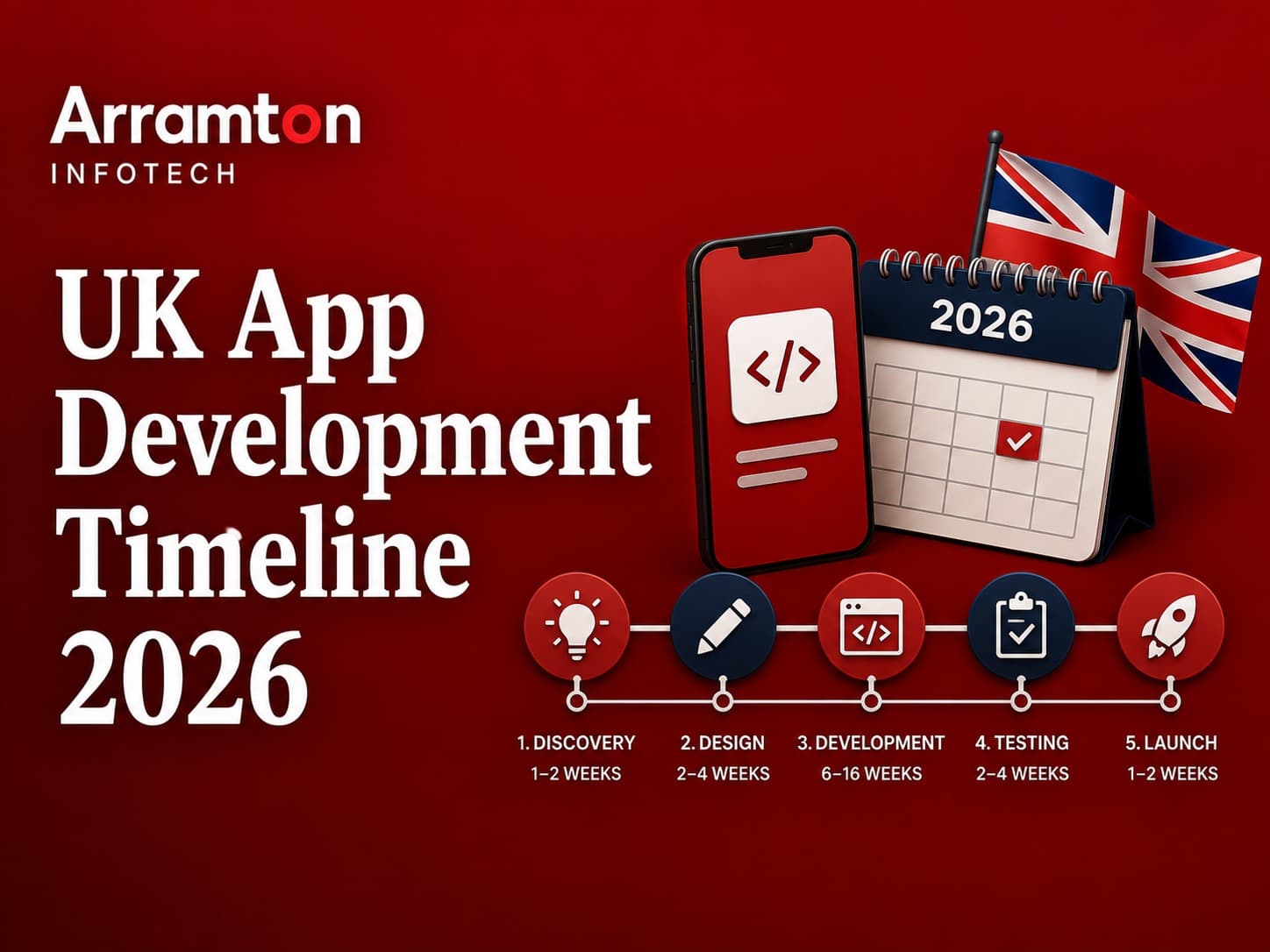
Phase-by-Phase Timeline: Discovery, Design, Development, QA, Launch
Understanding each phase is crucial for realistic timeline setting. Think of it as building a house; you wouldn't start hammering nails without blueprints. Each stage builds upon the last, and skipping or rushing one inevitably causes problems down the line.
This structured approach ensures clarity and allows for early identification of potential issues. It’s a proven methodology for delivering complex software on time and within budget.
Discovery & Planning
This is where we define the 'what' and 'why'. We delve into your business goals, target audience, and core features. Output includes user flows, technical specifications, and a finalised project roadmap.
UI/UX Design
Wireframing, prototyping, and visual design happen here. The goal is to create an intuitive and engaging user experience that aligns with your brand and business objectives. It’s about making the app not just functional, but desirable.
Development
This is the core coding phase where designs are translated into a functional application. It’s typically broken down into sprints, allowing for regular progress checks and adjustments.
Quality Assurance (QA) & Testing
Rigorous testing across devices and scenarios to identify and fix bugs. This includes functional testing, performance testing, and security audits to ensure a stable, secure product.
Deployment & Launch
The app is submitted to the relevant app stores and released to the public. Post-launch, we monitor performance and address any immediate issues.

Simple Utility App (Single Platform): 8–14 Weeks
A straightforward utility app, focused on a single core function and built for either iOS or Android, can be developed relatively quickly. This assumes a clear scope and minimal integrations.
For a Leeds-based startup founder needing a basic scheduling tool for their team, this timeframe is achievable. It means defining essential features like calendar view, basic task entry, and simple notifications, all within one operating system.
A simple utility app built for a single platform can launch in 8–14 weeks, provided the requirements are crystal clear from day one.
Standard Business App (iOS + Android + Backend): 16–28 Weeks
Most business applications require a backend to manage data and user accounts, alongside native iOS and Android front-ends. This complexity naturally extends the timeline.
Consider a UK e-commerce business wanting a customer loyalty app. This requires user authentication, product catalogues, order history, push notifications, and potentially integration with their existing POS system. This scope requires more development hours and a more synchronised team effort.
Have you mapped out every user journey for your standard business app? If not, expect delays.
Complex or Regulated App (FinTech, Healthcare, Marketplace): 28–52 Weeks
Apps in sectors like FinTech, healthcare, or complex marketplaces demand extensive security, compliance (e.g., GDPR, HIPAA), and intricate integrations. These projects naturally take longer due to the rigorous standards required.
A London-based FinTech startup building a new trading platform must adhere to strict financial regulations. This involves advanced security protocols, multiple API integrations with financial data providers, and robust audit trails, pushing timelines towards the higher end.
The additional time here isn't wasted; it's invested in ensuring security, compliance, and the reliability your users will depend on.

The 7 Things That Add Weeks to Any App Project
Scope creep is the most notorious timeline killer. Adding features mid-development without re-evaluating the impact on time and budget is a false economy.
Other common culprits include slow client feedback, technical challenges with third-party integrations, and unforeseen complexities in the chosen technology stack.
So what does this actually mean if you're building in Q3? It means rigorously defining your Minimum Viable Product (MVP) and resisting the urge to add 'just one more thing' once development starts.
Key factors extending timelines:
- Scope Additions During Development
- Slow Client Review and Approval Cycles (over 48-72 hours)
- Unforeseen Third-Party API Integration Challenges
- Complex Backend Development Requirements
- Need for Advanced Security or Compliance Features (e.g. GDPR, HIPAA)
- Cross-Platform Compatibility Issues Requiring Extra Testing
- Unexpected Technical Hurdles and Debugging Intensities
Fixed-Price vs. Time-and-Materials: How Billing Model Affects Timeline
A fixed-price contract offers budget certainty but requires a meticulously defined scope upfront. Any deviation can lead to renegotiations or project stalls.
Time-and-materials (T&M) provides flexibility, allowing for scope adjustments as the project evolves. This can be faster if managed well, but requires trust and transparent reporting from the development team.
At Arramton, we find T&M often suits innovative projects where the exact requirements might evolve, while fixed-price works best for well-defined utility apps. The choice impacts how quickly you can pivot if market needs shift mid-development.
Offshore Teams vs. UK Teams: Does Timezone Affect Delivery Speed?
The timezone difference (typically 4.5 hours overlap between the UK and India) can be managed with robust communication protocols. It's not an insurmountable barrier to speed.
With clear asynchronous communication strategies for non-urgent matters and dedicated synchronous overlap windows for critical decisions, offshore teams can match the delivery speed of UK-based developers. It’s about workflow structure, not just location.
A Manchester-based startup might worry about communication gaps with a Delhi development team. However, daily stand-ups via Zoom, dedicated Slack channels, and a shared project management tool like Jira bridge this effectively.
Working with an offshore team doesn't inherently slow down UK app development if the project management and communication frameworks are strong.
How to Review and Sign Off Faster Without Cutting Corners
A swift sign-off process is critical for maintaining momentum. Establish clear review criteria and designate a single point of contact responsible for approvals.
Provide developers with context and a structured way to present new features or iterations. This allows for efficient understanding and decision-making. Aim for feedback within 48 hours of delivery.
UK businesses often lose weeks to slow sign-offs, delaying subsequent development phases. A simple 72-hour SLA for client feedback can prevent this bottleneck.

The Timeline Conversation to Have With Your Developer Before You Sign
Before signing any contract, demand a phase-by-phase breakdown of the estimated timeline. Ask about dependencies between tasks and the team's capacity during each stage.
Crucially, question their contingency planning. What happens if key personnel leave, or if a critical third-party API has unexpected issues? Understanding their risk mitigation strategies builds confidence in their timeline estimates.
What do CTOs in London ask before signing? They probe the 'what ifs' and demand transparency on potential risks that could derail their launch schedule.
FAQs
How long does it take to build a simple mobile app in the UK?
A simple, focused utility app (single platform, core functionality, no complex integrations) takes 8–14 weeks with a dedicated team. This assumes: a completed specification before development starts, no major scope changes mid-build, and a client who reviews and approves deliverables within 48–72 hours of receiving them. Delayed feedback from the client is one of the most common reasons simple apps take 20+ weeks.
What is the fastest a UK app development company can deliver an MVP?
6–8 weeks for a very tightly scoped MVP — typically 3 core screens, basic authentication, one primary user flow, and no external integrations. Below 6 weeks, quality and security are almost always compromised. Agencies offering 4-week MVPs are typically delivering prototypes (clickable mockups or no-code builds) rather than production-quality code.
Why do UK app development timelines so often slip?
In order of frequency: (1) scope additions during development — features added after the spec is agreed; (2) slow client feedback — reviews that take a week instead of 2 days; (3) third-party API delays — external services that take longer to integrate than expected; (4) App Store review rejections — particularly from Apple; (5) discovery was skipped and requirements were discovered during build rather than before it.
Does working with an offshore team in India make UK app development faster or slower?
Marginally slower if not managed well due to timezone differences (4.5-hour overlap with IST during UK business hours). With a well-structured working arrangement — async morning stand-ups, synchronous overlap windows for decisions, clear daily deliverables — offshore delivery is comparable in speed to UK-based teams. The cost saving of 40–60% typically outweighs the minor coordination overhead.
Conclusion
Apple App Store: typically 24–72 hours for a first submission, though complex apps or apps with in-app purchases can take 5–7 days. App Store rejection extends timelines significantly — plan 1–2 rejection cycles into your schedule. Google Play Store: 24–48 hours typically, sometimes faster. Both stores have expedited review processes for critical bug fixes.
The initial hook mentioned the shock of unexpected timelines. This guide has unpacked the phases, variables, and realistic expectations for app development in the UK for 2026.
Ultimately, the most critical factor for a predictable timeline is clear communication and a defined process, not just the complexity of the app itself.
If you’re looking for a development partner who prioritises transparency and realistic project planning for your next iOS or Android project, Arramton builds custom solutions for UK and US companies.