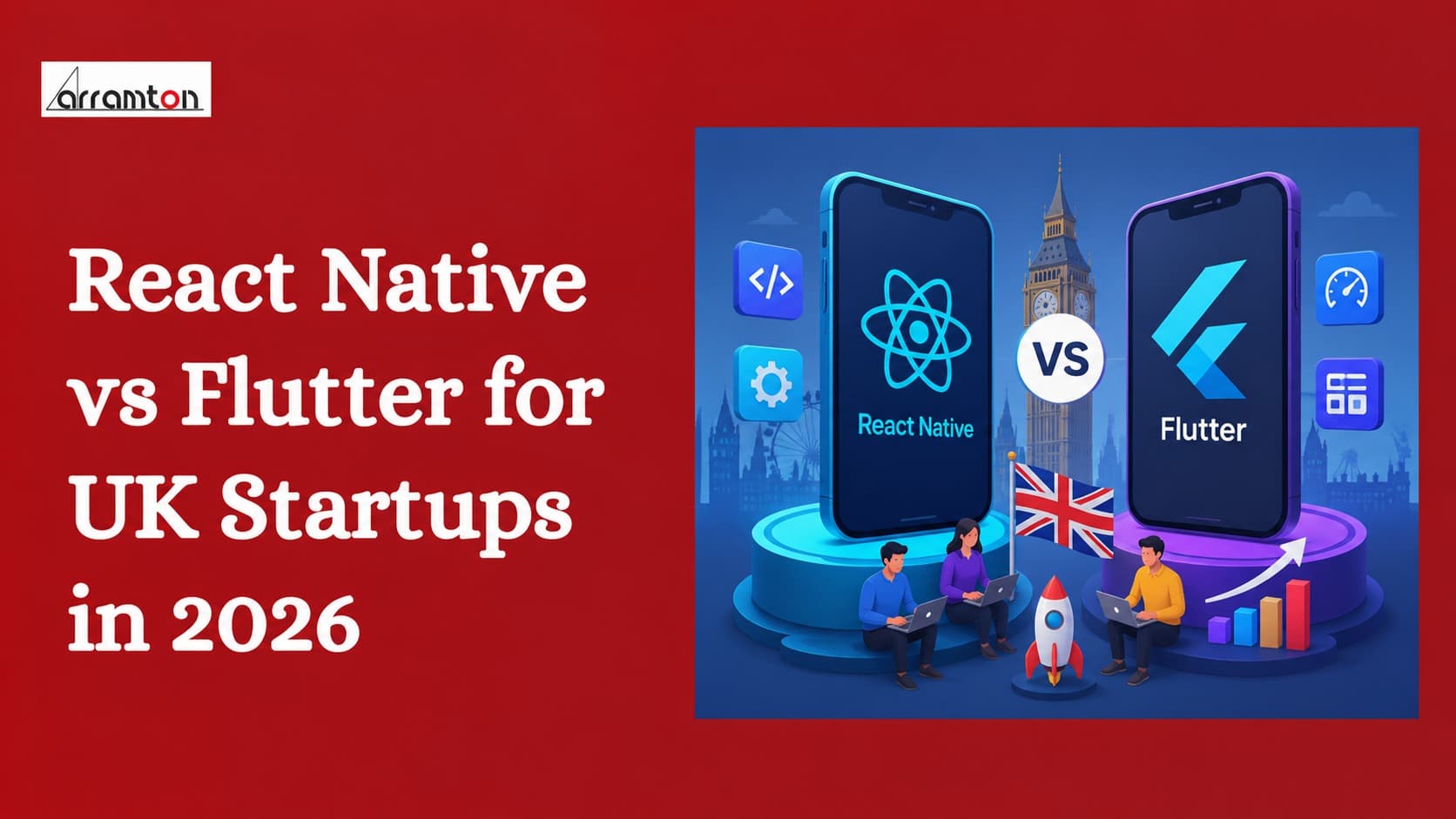
The truth is, most UK startups pick their cross-platform framework based on buzz, not business impact.
Don't get caught chasing shiny objects. The choice between React Native and Flutter isn't just technical; it directly impacts your development speed, cost, and time-to-market – critical factors when every pound and week counts in the UK startup scene. By 2026, this decision will have a profound effect on your app's success.
Why Cross-Platform Development Matters for UK Startups
Building separate native apps for iOS and Android used to be the default. For many UK businesses, particularly those operating with lean budgets, this approach is simply unfeasible. It means doubling development effort, increasing maintenance overhead, and significantly delaying your launch. Cross-platform frameworks aim to solve this by allowing you to write code once and deploy it everywhere.
This efficiency is invaluable for startups. It means a smaller team can manage a broader reach, and new features can be rolled out simultaneously to both user bases. The primary keyword we're dissecting here is 'React Native vs Flutter for UK startups', and understanding this fundamental efficiency is the first step in making the right choice.
React Native: The Established Player
React Native, developed by Facebook (now Meta), has been around longer and boasts a larger, more mature ecosystem. It uses JavaScript and React, which means if your team already has web developers proficient in these technologies, the learning curve is significantly gentler.
For many UK SMEs and startups, existing web development talent is readily available. Leveraging this existing skillset with React Native can mean faster onboarding and quicker initial development cycles. You're not starting from scratch.
This familiarity allows for rapid prototyping and iteration, crucial in the early stages of a startup. Teams can often transition from web to mobile development with minimal retraining. It's about utilising existing assets to their fullest potential.
-
Performance Considerations
While React Native can achieve near-native performance, it sometimes requires careful optimisation. It bridges to native components, and this abstraction layer can occasionally introduce performance bottlenecks if not managed correctly. Complex animations or computationally intensive tasks might require native modules for optimal results.
This is where experience matters. At Arramton, we've seen projects where performance dipped simply because native modules weren't integrated early enough. A skilled team understands when and how to drop down to native code to maintain that silky-smooth user experience.

Flutter: The Challenger's Toolkit
Google's Flutter is newer but has rapidly gained traction due to its compelling feature set, particularly its rendering engine and expressive UI capabilities. It uses Dart, a language that, while less common than JavaScript, is relatively easy to learn and offers strong performance.
-
Expressive UI and Fast Development
Flutter's biggest draw is its rendering engine, which draws UI directly onto a canvas. This means consistent UIs across platforms and often faster UI development. Widgets are a core concept, allowing for rich, customisable interfaces that look identical on iOS and Android.
This consistency is a significant win for brand building. A London-based fintech startup doesn't want their app to look and feel subtly different on the two major platforms. Flutter offers that promise of uniformity out of the box.
Flutter compiles to native ARM code, meaning it generally offers excellent performance. Its architecture often leads to smoother animations and a more responsive feel, especially in graphically intensive applications. This compiled nature eliminates the JavaScript bridge found in React Native.
However, Dart itself is not as widely adopted as JavaScript. Finding senior Dart developers in the UK market can sometimes be more challenging, potentially impacting hiring timelines and costs for specialised roles.
React Native vs Flutter: A Direct Comparison for UK Startups
Let's get down to the brass tacks. For a UK startup founder or CTO, the decision boils down to trade-offs in team skills, project complexity, and long-term maintenance.
-
Team Skillset: The Deciding Factor?
If your existing team or readily available talent pool is strong in JavaScript and React, React Native offers a clear advantage. The onboarding will be faster, and you can leverage existing knowledge to hit the ground running. This reduces initial training costs and time-to-deployment.
Conversely, if you're building a team from scratch or have developers eager to learn a new, powerful language, Flutter's Dart might be an exciting prospect. However, the market availability of experienced Dart developers in the UK needs careful consideration. A recent survey of UK developers indicated a nearly 3:1 ratio of JavaScript to Dart expertise.
-
Ecosystem and Community Support
React Native benefits from a vast, mature ecosystem built around JavaScript. There are countless libraries, tools, and a massive community to draw upon. This means solutions to common problems are often readily available.
Flutter's ecosystem is growing rapidly but is still younger. While it has strong official support from Google and a passionate community, you might occasionally find fewer third-party libraries for very specific functionalities compared to React Native.
Flutter generally excels in providing pixel-perfect, consistent UIs across platforms. Its widget system is designed for this purpose. This is a significant advantage if your brand identity demands absolute visual uniformity.
React Native uses native UI components, which can lead to a more 'native' feel but can also result in subtle visual differences between iOS and Android. Achieving perfect consistency might require more development effort and careful management of platform-specific styling.
-
The Bottom Line: What's the Real Cost in 2026?
When we talk about cost for UK startups, it's not just about the initial development. It's about the total cost of ownership: development, maintenance, updates, and team scalability. A standard cross-platform app using either framework could range from £20,000 to £60,000 for an MVP in the UK, depending on agency rates and complexity. However, the choice of framework impacts ongoing costs.
The biggest budget killer for UK startups isn't the framework itself, but the time lost due to an inexperienced team struggling with a framework's nuances. React Native might seem cheaper initially if you have JS developers, but if you need complex native integrations, Flutter could prove more efficient long-term. Conversely, if you have significant web dev resources, React Native's faster ramp-up could save you precious weeks.
Common Pitfalls to Avoid
Many UK businesses underestimate the true cost and complexity of cross-platform development. Here are common mistakes that can derail your project:
-
Mistake 1: Choosing based on popularity, not suitability.
Picking the trendiest framework without considering your team's existing skills or your app's specific technical needs is a recipe for disaster. A Series A startup in Manchester needed a highly interactive, real-time data visualisation app; they chose Flutter based on its UI claims, only to find the team struggled with the Dart learning curve and the available charting libraries were insufficient for their needs. They eventually switched to React Native and hired dedicated JavaScript developers.
-
Mistake 2: Underestimating native module requirements.
Both frameworks rely on bridging to native code for certain functionalities (e.g., background tasks, hardware access). If your app heavily relies on these, ensure your chosen framework and team can handle them efficiently. Forgetting this can lead to major performance issues and costly rewrites.
-
Mistake 3: Neglecting long-term maintenance.
Framework updates, OS changes, and evolving libraries mean ongoing maintenance is crucial. Choose a framework with a robust community and a clear roadmap. React Native, with its longer history, often has more readily available solutions for long-term maintenance challenges.
Making the Final Decision for Your UK Startup
So, React Native or Flutter for your UK startup in 2026? There's no single 'best' answer. The right choice is highly situational.
When React Native Shines
Choose React Native if:
- Your team has strong JavaScript/React expertise.
- You need to get to market rapidly with an MVP.
- Your app has standard mobile functionalities and doesn't push extreme graphical limits.
- Access to a vast array of third-party libraries is a priority.
React Native is a pragmatic choice for many UK tech companies looking to leverage existing web development talent.
When Flutter Excels
Opt for Flutter if:
- You need highly custom, visually consistent UIs across platforms.
- Your app requires smooth, complex animations and top-tier performance out-of-the-box.
- You're open to learning Dart or have developers keen on it.
- Future-proofing with a modern, Google-backed framework is key.
Flutter is compelling for apps where the UI and performance are paramount differentiators.
Frequently Asked Questions
How much does it cost to build a React Native app in the UK?
The cost varies significantly, but a typical custom React Native app MVP developed by a UK agency can range from £18,000 to £55,000. Factors include agency location, team size, feature complexity, and integration needs.
Is Flutter more expensive to develop for than React Native?
Not inherently. While Dart developers can sometimes be more specialised and command higher rates, Flutter's faster UI development can offset this. The total cost depends on your team's existing skills and the project's specific requirements.
Which framework is better for performance in 2026?
Both offer excellent performance. Flutter often has a slight edge in raw animation smoothness due to its direct rendering. React Native can achieve native performance, but may require more optimisation and native module integration for complex tasks.
Can I hire developers for React Native or Flutter in London?
Yes, London has a strong market for both. JavaScript/React developers are more abundant, making React Native hiring potentially easier. Skilled Flutter developers are available but might require a more targeted search. At Arramton, we specialise in providing dedicated staff augmentation for both React Native and Flutter projects, connecting UK companies with top global talent.
Conclusion: The Strategic Choice for Your App
You've seen the trade-offs. The decision between React Native and Flutter for your UK startup in 2026 isn't about picking the 'better' technology, but the 'smarter' one for your specific business goals, team capabilities, and market strategy. Underestimating these factors leads to delays, budget overruns, and ultimately, a less successful product. If you're evaluating partners for building a high-impact mobile application, Arramton has extensive experience delivering custom solutions for UK and US companies, ensuring your chosen framework powers your business objectives effectively. Learn how Arramton builds robust mobile solutions for businesses like yours.